Lifetime Citizen Portal Access — AI Briefings, Alerts & Unlimited Follows
Planning commission backs 8-unit, car‑free infill at 220–224 S. Peyton with parking reduction
Loading...
Summary
The commission recommended council approval of a small mixed‑use infill building at 220–224 South Peyton Street that would replace a surface lot with an eight‑unit, transit‑oriented development and remove seven on‑site parking spaces, prompting neighbors to raise concerns about flooding, emergency access and street parking.
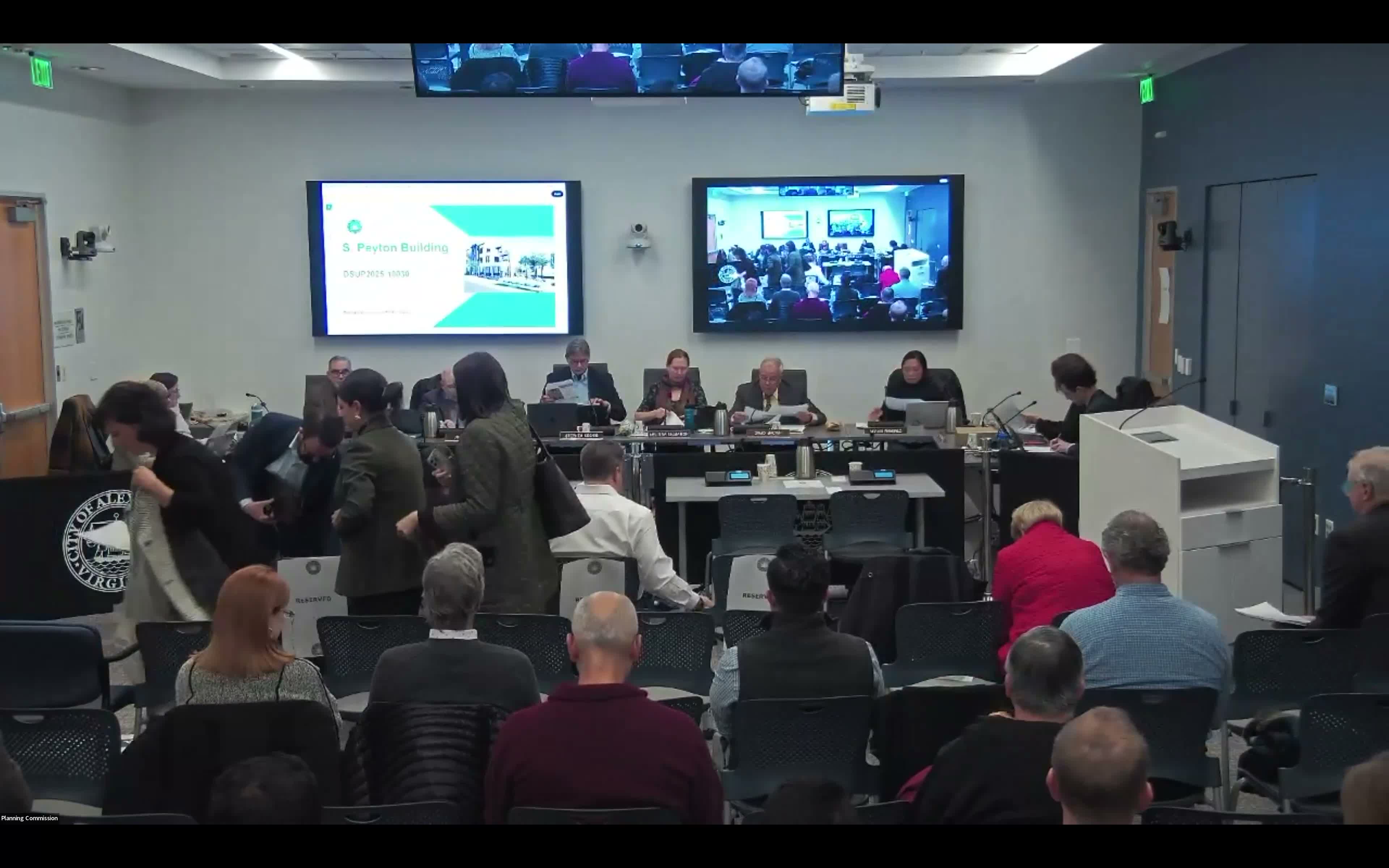
The Alexandria Planning Commission on Jan. 6 recommended council approval of a development special use permit for 220 and 224 South Peyton Street, a triangular infill project proposed by Windmill Hill LLC.
Stephanie Sample of the Department of Planning and Zoning said the proposal would replace a 100% impervious surface parking lot with a mixed‑use building containing ground‑floor commercial space and eight one‑bedroom rental units on the second and third floors. Staff said the project would remove two curb cuts, widen sidewalks, add street trees and exceed minimum stormwater treatment with a 14% reduction in phosphorus runoff. The application requested an increase in non‑residential FAR and a parking reduction to zero on site (removing seven required spaces).
Residents who signed a group letter and individual speakers told the commission they opposed the project’s parking reduction and raised safety concerns about Commerce Street’s 600‑foot cul‑de‑sac and constrained emergency‑vehicle turnaround. “This cul‑de‑sac does not meet minimum requirements for an apparatus turnaround,” said Andrew Herseff, representing nine property owners, who also described chronic flooding and urged the commission to consider conditions restricting resident parking permits. Several neighbors recounted ambulance rides and vehicle access problems at the cul‑de‑sac.
Applicant counsel Lauren Riley said the project follows small‑area plan recommendations for transit‑oriented infill, would reduce vehicle trips compared with the current surface parking use, and that future residents would not be eligible for district residential parking permits; staff and the applicant pointed to nearby transit and monthly garage availability. The applicant also told commissioners that the Board of Architectural Review had provided supportive concept review comments.
Commissioners pressed staff and the applicant about unit sizes, ground‑floor uses, drainage/stormwater performance and experience with car‑free approvals in Old Town, and were told other projects in the area had successfully reduced or removed parking. After discussion, Vice Chair Koenig moved to recommend council approval of the DSUP; the motion passed 7–0.
The recommendation does not authorize construction; any building permits or site plan approvals must meet final code, stormwater and site‑access requirements.