
Council approves broad zoning text changes to speed commercial approvals; staff to return on speakers, live-entertainment and trailer rules
Get AI-powered insights, summaries, and transcripts
Subscribe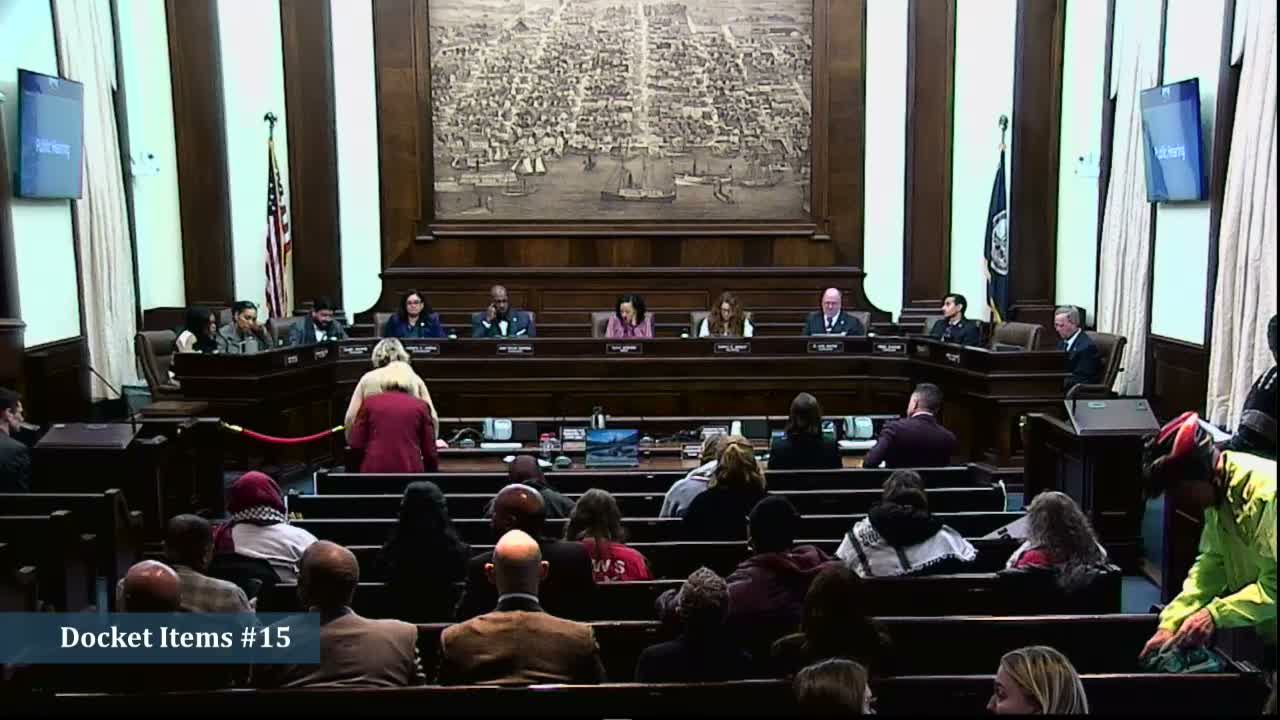
Summary
After extended debate, Alexandria City Council approved a package of commercial zoning text amendments to streamline approvals for many uses but removed four areas for further study (outdoor speakers, music/live-entertainment thresholds, private school trailers, and outdoor fitness) and asked staff to return with options.
Alexandria City Council on Dec. 13 voted to adopt a commercial zoning text amendment package that streamlines approvals for many commercial uses while retaining or deferring a handful of provisions for additional study.
Staff from Planning and Zoning presented a package of updates aimed at modernizing the zoning ordinance, reducing administrative redundancy, and converting certain special-use permit (SUP) categories into permitted or administrative-SUP categories. Principal planner Anne Horowitz told the council the measures were based on five years of permitting experience and public engagement.
Key changes approved: indoor restaurants in many commercial zones will become permitted uses subject to clarified operational limitations (outdoor dining and speakers remain regulated). Staff also proposed simplifying approvals for public buildings and school trailers and expanding some smaller indoor live-entertainment venues subject to use limitations.
Points of contention and deferrals: A substantial portion of the meeting focused on noise, outdoor amplified speakers, and the appropriate threshold for indoor live entertainment (staff proposed a 2,000-square-foot threshold). Council members and the public debated enforcement capacity and neighborhood impacts; Vice Mayor Bagley moved to approve the package while removing four topics for further study: (1) a total prohibition on exterior loudspeakers, (2) the 2,000-square-foot cap for indoor live entertainment, (3) private-school trailers moving to permitted status, and (4) outdoor fitness/exercise limitations. Staff committed to return with additional proposals within roughly 90 days for the removed items.
Councilman McPike, Councilman Chapman and others praised the overall package as more flexible than the existing code while acknowledging the need for careful follow-up on noise and enforcement. The council adopted the main package and the carve-outs in a roll-call vote.
Why it matters: The amendments are intended to reduce permitting time for businesses and adapt the ordinance to contemporary commercial uses. Council deferred specific items that touch on neighborhood livability and enforcement.
What happens next: Staff will continue refinement of the removed items and return with options and recommendations for council consideration, including proposed enforcement measures, timelines and community outreach.