House staff outlines plan for member-controlled constituent data lake to boost interoperability and AI tools
Loading...
Summary
A House staff member told a House subcommittee the Chief Administrative Office proposes a secure, member-controlled constituent data lake to let multiple vendor and House applications access member-authorized data, aiming to spur innovation while emphasizing privacy and security safeguards.
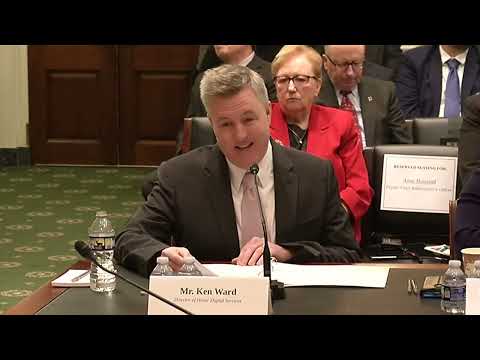
At a House subcommittee hearing, a House staff member presented a plan from the Chief Administrative Office to create a secure, member-controlled constituent data lake intended to give each member’s office control over where and how its constituent records are stored and accessed.
The presenter said the current system — in which each member’s constituent data resides in one of a few proprietary constituent management systems (CMS) — limits third-party innovation and interoperability. "We've proposed creating a secure house controlled constituent data lake for each member that can be leveraged by multiple house and vendor applications if and as authorized by each member," the staff member said.
Why it matters: the proposal would allow member offices to authorize multiple vendors and House applications to work with their constituent records without forcing offices to change their existing CMS. The CAO argued the change could expand the pool of tools available to offices, including AI-powered services that surfaced at a recent congressional hackathon.
The staff member introduced the CAO team present at the hearing, including Catherine Spindor, CAO; Jamie Crotz, chief information officer; Bob Barrett, chief digital officer; and Adi Adenegy, deputy chief information security officer.
The presentation framed the proposal as part of a broader modernization effort. The presenter listed CAO-built tools such as the Communicating with Congress API, the eDear Colleague system, HousePal, Legidex, and Quill, and cited recent pilots including FlagTrac (for flag-request management) and a "case compass" initiative to aggregate and analyze casework to identify trends and support oversight.
The staff member cautioned that constituent privacy and security must remain central, noting recent advancements in secure storage and computing technologies that could enable a safer shared-access model. "Today's citizens and advocacy groups are already leveraging AI to reach and influence Congress," the presenter said, using that trend to argue for better tools and governance for member offices.
Officials described the proposal as requiring a multiyear investment but portrayed the rollout as iterative, delivering new capabilities over time while allowing offices to retain their current CMS. The staff member said the approach would focus on security, governance, and user needs so that members could pick from a broader set of vendors and internal House applications.
The presentation closed with an offer to take questions from subcommittee members.
Next steps: the staff member invited questions from the subcommittee; the transcript does not record committee feedback or any votes on the proposal.