Get Full Government Meeting Transcripts, Videos, & Alerts Forever!
Get email alerts on the Healthcare Subsidies topic
No spam. Unsubscribe anytime.
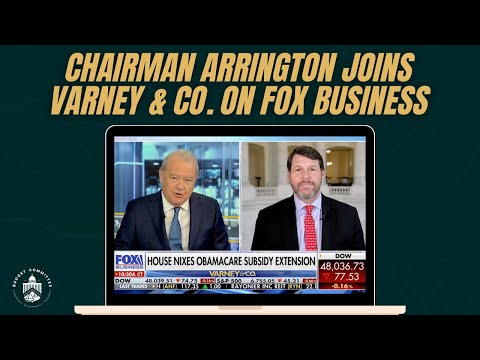
House Budget Committee chair Jody Arrington says Republicans will not extend COVID-era ACA subsidies, cites fraud and CBO scoring for alternatives
Summary
House Budget Committee Chair Jody Arrington told a televised interviewer that House Republicans will not extend COVID-era increases to Affordable Care Act subsidies, calling the payments 'fraud ridden' and citing a CBO score for a cost-sharing reduction he said would reduce premiums and save taxpayers money.
House Budget Committee Chair Jody Arrington said in a televised interview that House Republicans will not extend the COVID-era increases to Affordable Care Act subsidies when they expire, arguing the temporary payments have raised premiums and been vulnerable to fraud.
“Do no harm,” Arrington said, adding that “these COVID era fraud ridden subsidies have made health care more expensive.” He alleged “tens of billions” in improper payments and said there were “tens of thousands of Social Security numbers from dead people being used to siphon money out of the program.” Those allegations were presented as claims by Arrington and were not independently verified in the interview.
Arrington also cited the Congressional Budget Office, saying the nonpartisan agency has “already scored 1 of the provisions, the cost sharing reduction,” and asserting that the change would reduce premiums by about 11% and save taxpayers “30 billions of dollars.” He framed that provision and other private-market reforms — including greater transparency in drug supply-chain transactions — as Republican alternatives to extending the subsidies.
The host noted that any change is unlikely before January. Arrington said Republicans could pursue those policies through budget reconciliation to move around a Senate filibuster, describing reconciliation as the vehicle to enact premium-lowering reforms.
There was no vote or formal committee action recorded in the interview. The discussion consisted of policy claims and political strategy but did not include documentary evidence or a CBO report displayed on air. Arrington’s numerical assertions about the scale of fraud and the projected savings were presented as his statements; they were not corroborated during the interview.
Why this matters: the COVID-era increases to ACA cost-sharing and premium assistance have been a key policy lever during the pandemic. Whether Congress extends, modifies or lets those increases lapse affects insurance costs for millions, the federal budget and political debates ahead of upcoming elections.
Next steps: Arrington said the earliest legislative changes would come after lawmakers reconvene in January and suggested reconciliation could be used to pursue the alternatives he described.