Committee opens hearing on aviation safety, pressing FAA on DCA collision, staffing and ATC modernization
Get AI-powered insights, summaries, and transcripts
SubscribeSummary
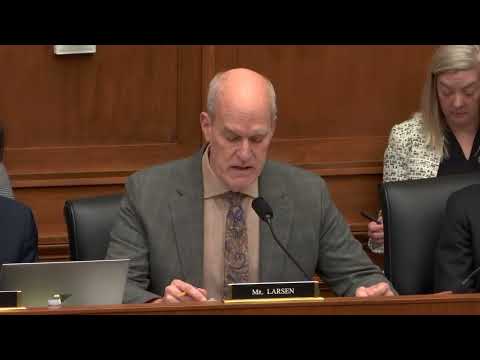
A committee member opened a hearing on the state of American aviation, pressing the FAA to explain its response to the DCA midair collision, staffing losses, a rapid capacity reduction at high-traffic airports, and the agency's plan and transparency for a $12 billion air traffic control modernization led by prime integrator Peraton.
Unidentified Speaker opened a congressional hearing on the state of American aviation, citing the upcoming one-year anniversary of the DCA midair collision in which a U.S. Army Blackhawk collided with American Airlines Flight 5342 and calling for exhaustive investigation and accountability. "We owe it to victims, to families ... to leave no stone unturned to learn every lesson that we can," the speaker said.
The speaker said the Department of Transportation and the Federal Aviation Administration took immediate steps after the collision, including banning most nonessential helicopter operations near Ronald Reagan Washington National Airport (DCA), reviewing 21 U.S. airports for similar risk factors and requiring federal aircraft operations near DCA to broadcast position using ADS‑B Out. The speaker asked how FAA is developing new policies, bolstering safety redundancies, preparing for the National Transportation Safety Board's final report and evaluating systemic issues beyond the NTSB's investigation.
On the nation's air traffic control (ATC) systems, the speaker cited a Government Accountability Office finding that of the FAA's 138 systems, 105 are unsustainable or potentially unsustainable and said modernization is "long overdue." The committee member noted bipartisan support for a roughly $12,000,000,000 investment in ATC modernization but said the FAA must show how it is spending existing funds and be more transparent before Congress approves additional investment.
The speaker identified Peraton as the FAA's selected prime integrator for modernization work and said questions remain about next steps and program oversight. "The FAA finally selected prime integrator, Peraton, to oversee its modernization efforts, but there are still several questions about next steps," the speaker said, urging a data-driven, transparent and safety-focused approach.
Workforce and institutional knowledge losses were a central concern. The speaker said earlier retirement buyouts and other departures removed safety-critical employees from the FAA, increasing strain on remaining personnel and undermining the agency's safety mission. During a recent government shutdown, the speaker said, "thousands of air traffic controllers and critical aviation safety workers were forced to work long, stressful hours without pay," which added to long-term stress and uncertainty.
The member also criticized an Administration decision that temporarily reduced airline flight capacity by up to 10% at 40 high-traffic airports, saying the step was taken quickly and without adequate coordination with stakeholders. The speaker said they and several Democratic colleagues sent the FAA a letter requesting the data used to justify the capacity reduction and its restoration to normal levels; the speaker said the agency transmitted a response "late last night" and asked the administrator to elaborate in today's hearing and in a member briefing next month.
The speaker closed by saying the appointment of a new FAA administrator presents an opportunity for stability and renewed focus on safety, and thanked Administrator Bradford for appearing at the hearing. The hearing proceeded to witness testimony after the opening remarks.