Get Full Government Meeting Transcripts, Videos, & Alerts Forever!
Committee backs bill giving FDIC limited discretion to consider competition in failed-bank resolutions
Summary
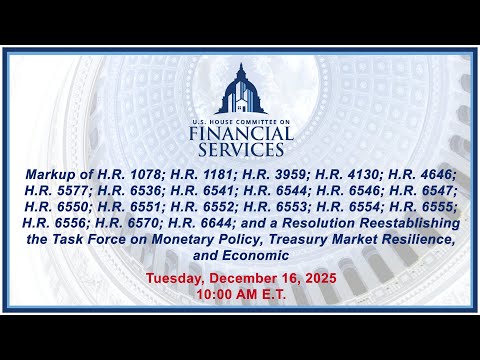
The Committee adopted HR 6547 as amended, a bill that would allow the FDIC, in coordination with the Federal Reserve and Treasury, to select resolution options other than the least-cost choice when justified to limit further concentration, subject to rulemaking guardrails and recoupment requirements.
Rep. Mike Flood (chair of the Housing and Insurance Subcommittee) described HR 6547, the Least Cost Exception Act, as a targeted reform to give the FDIC flexibility in bank resolution scenarios. Flood said the current "least cost" statutory mandate can compel the agency to select the lowest-cost bidder even if that choice increases market concentration by favoring very large institutions. The bill would allow regulators to approve an…
Already have an account? Log in
Subscribe to keep reading
Unlock the rest of this article — and every article on Citizen Portal.
- Unlimited articles
- AI-powered breakdowns of topics, speakers, decisions, and budgets
- Instant alerts when your location has a new meeting
- Follow topics and more locations
- 1,000 AI Insights / month, plus AI Chat