House Judiciary hearing opens on Jan. 6 anniversary, spotlighting pardons and risk of renewed political violence
Loading...
Summary
Lawmakers opened a House Judiciary hearing marking five years since Jan. 6, criticized presidential pardons of Jan. 6 defendants and introduced a panel of witnesses — including a former Capitol Police officer and legal experts — to examine links among pardons, misinformation and political violence.
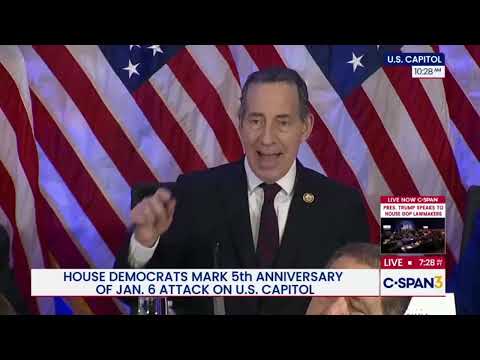
A House Judiciary committee session opened with members marking the five-year anniversary of the Jan. 6 attack on the U.S. Capitol and warning that recent presidential pardons risk encouraging further political violence. Unidentified Speaker 1 told the panel that "it has been 5 years since January 6" and accused Republican leaders of failing to install a bipartisan plaque honoring officers who defended the Capitol.
The speaker framed Jan. 6 as the convergence of three intertwined threats: a "coup" rooted in the "big lie" and coordinated pressure campaigns; organized violent groups such as the Proud Boys and Oath Keepers; and a mass "mob" that carried out the riot. "The coup depended also on coercive pressure campaigns," the speaker said, adding that rallies and online messaging had been used to recruit and prepare participants.
The hearing also focused on presidential pardons issued after the attack. Speaker 1 said the president "pardoned nearly 1,600" individuals connected to Jan. 6 and characterized the pardons as "rewards" that have enabled a group of pardoned defendants to remain active. The committee played a video in which unnamed speakers said of the pardons, "He pardoned criminals who attacked the Capitol," and described pardoned defendants as people who "beat and batter police officers." Speaker 1 cited a report by House Judiciary Democrats that, the committee said, found "at least 33" individuals pardoned in connection with Jan. 6 have since been implicated in additional crimes, including terroristic threats and domestic violence.
The panel then introduced its first witness panel. Speaker 1 presented Officer Winston Pynjan, described in the transcript as a former Capitol Police officer who defended the West Front on Jan. 6; Brendan Beaulieu, a former federal prosecutor in the U.S. attorney's office in Washington, D.C.; Mary McCord, executive director of the Institute for Constitutional Advocacy and Protection at Georgetown Law; and Pamela Hemphill, an Idaho resident who the transcript says declined a presidential pardon after pleading guilty for actions at Jan. 6. The committee invited the first witness to begin testimony.
No formal votes, motions or legislative actions were recorded in the transcript excerpts provided. The hearing, as presented in the transcript, aimed to link the committee's review of Jan. 6 to concerns about pardons, ongoing misinformation, and risks to public safety; testimony by the introduced witnesses was expected to follow.
The committee proceeded to the first witness's testimony following the introductions.