Citizen Portal
Sign In

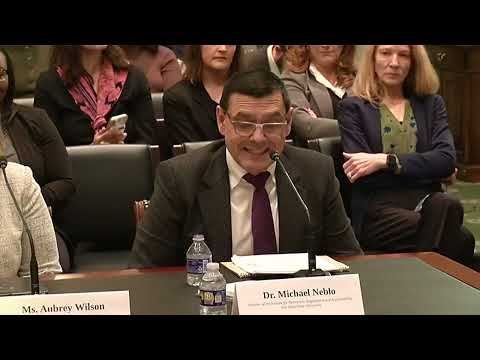
Witness tells House Administration Committee deliberative tech can reconnect Congress with constituents

House Administration Committee · December 17, 2025

Loading...

AI-Generated Content: All content on this page was generated by AI to highlight key points from the meeting. For complete details and context, we recommend watching the full video. so we can fix them.

Summary

A witness told the House Administration Committee that online deliberative forums and targeted technology could narrow the trust gap between members of Congress and ordinary constituents, citing a 1,000-person survey that found low contact with offices and high participant approval for deliberative town halls.

At a House Administration Committee hearing, a witness urged lawmakers to adopt deliberative online forums and redirected staff time to deepen constituent engagement, citing survey data and international examples.

The witness told the committee they partnered with the panel and House Digital Services to survey 1,000 citizens and found “at best, only 1 in 5 contacted their member last year” and that “only 13% trust Congress to do what's right.” The testimony framed those findings as evidence that silence does not equal satisfaction and that many citizens are frustrated rather than apathetic.

The witness said governments abroad and domestic pilot projects have used new approaches and technology to create meaningful two‑way communication. They reported that previously disengaged citizens who are invited to online deliberative town halls prepare, participate and contribute more than those who already contact offices; in the witness’s account, 94% of participants called the forums “very valuable for our democracy” and said they wanted to participate again.

On artificial intelligence, the witness relayed survey responses that “80% of citizens told us that AI chatbots were not acceptable for matters of substance,” while also noting AI’s practical value for routine constituent‑service tasks. They argued AI can free staff time but cautioned that technology alone will not resolve the core democratic deficit unless freed capacity is used for substantive deliberation rather than only customer service.

The witness warned that reliance on a customer‑service model treats citizens like consumers, and that genuine partnership between members and constituents—structured deliberation that treats participants as partners in self‑government—produces measurable gains in political knowledge, trust, turnout and civility. The testimony cited a national forum associated with Kilmer and Timmons and large-format forums involving thousands of citizens as examples showing reduced partisan animosity and increased legislative expertise in deliberative settings.

The witness pointed to other official examples, including the Chilean Constitutional Convention and the Good Friday Accords, as precedents for structured public deliberation. They also warned that a minority of frustrated citizens are now willing to consider alternatives to representative democracy, but said the majority would prefer working through elected representatives if engagement is reimagined.

The witness concluded by urging the committee to consider pilot programs and by offering the panel’s assistance, saying “the technology exists. The models are proven. Your constituents are ready and waiting if you're ready to meet them.” The hearing record shows no formal motions or votes on the testimony itself; the witness finished by thanking the committee.