Citizen Portal
Sign In

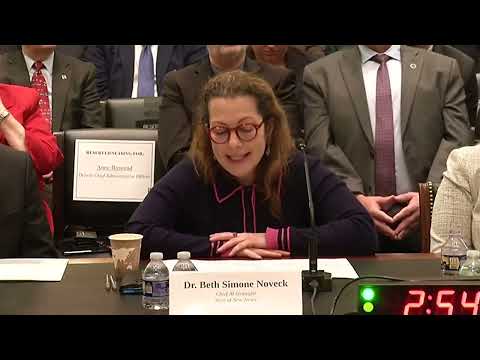
Witness urges House Administration subcommittee to pilot AI tools to scale public input

House Administration: House Committee · December 17, 2025

Loading...

AI-Generated Content: All content on this page was generated by AI to highlight key points from the meeting. For complete details and context, we recommend watching the full video. so we can fix them.

Summary

An unnamed witness told the House Administration subcommittee that AI tools, paired with disciplined processes, could let Congress solicit and organize large volumes of public questions and comments; they recommended testing subcommittee Recommendation 176 with a low-risk pilot and offered an open-source tool and training.

An unidentified witness appearing before the House Administration subcommittee urged members to test AI-assisted tools to solicit and manage public input, saying the technologies can help Congress hear more constituents without overburdening staff.

The witness framed the problem in staffing and capacity: "committee staff are roughly 40% smaller than they were in 1980," and support agencies such as the Congressional Research Service, Government Accountability Office and the Congressional Budget Office "have shrunk 45% in the last generation," limiting lawmakers' ability to process public contributions. The witness added that Congress receives about "81,000,000 calls coming into Congress every year from constituents," which contributes to the scale challenge of meaningful participation.

To address that gap, the witness pointed to two subcommittee recommendations — 176 and 174 — as "a practical starting point" and urged a test of Recommendation 176 through "a simple low risk pilot" that would invite the public to submit questions for hearings. The witness described international experience, saying Brazil's Senate has invited residents to submit questions by phone and web and has integrated AI to deduplicate and cluster similar questions; participation figures cited were "46,000 questions across 546 hearings in '23 and 69,000 questions across 440 hearings in '24."

Offering a concrete tool, the witness described a student-built, free, open-source system called Open Feedback, developed through an "AI for Impact" program at Northeastern University and in New Jersey community colleges and now being deployed in Boston. "Residents can submit feedback in natural language, and the AI assistant responds with clarifying questions to improve the submission," the witness said. They added that the tool allows staff to organize comments by topic, analyze patterns and route issues to the correct department for faster follow-up.

The witness also highlighted training capacity. They described Innovate US, a free nonpartisan nonprofit they founded, which has provided peer-to-peer AI training to about 150,000 government professionals, and offered to adapt the Open Feedback tool and provide training for congressional staff. "The next AI for Impact cohort begins in January, and we'd be happy to adapt this tool for your use," the witness said.

They warned of potential pitfalls, saying AI should be used to sort and organize rather than to make decisions: "The hallucinations [are addressed] by ensuring that we're using AI to sort and to organize and not to make decisions," and cautioned against "ineffective or performative engagement that's disconnected from real decision making." The witness concluded that pilots offer a practical way to tap public expertise to strengthen lawmaking and oversight and offered the group's assistance: "we all stand at the ready to assist."

No formal motion, vote or formal decision was recorded in the transcript; the witness's suggestions were presented as proposals and offers to assist the subcommittee rather than enacted actions.