
House Energy Subcommittee opens hearing on U.S. nuclear industry, regulatory reforms and supply issues
Get AI-powered insights, summaries, and transcripts
Sign Up Free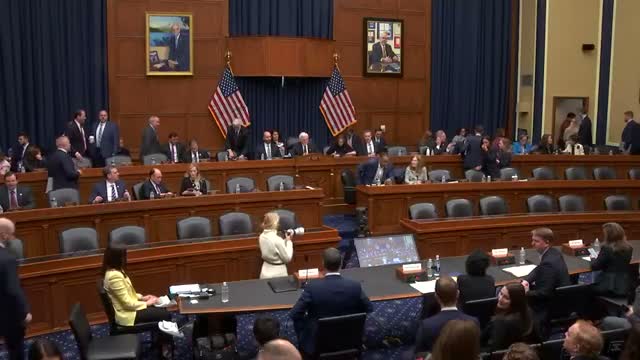
Summary
The Subcommittee on Energy opened a hearing to assess the U.S. nuclear industry’s progress, regulatory changes and supply-chain issues; witnesses from industry, a policy group and the Idaho National Laboratory were introduced to provide perspectives on licensing, fuels and deployment.
The subcommittee chair opened the House Energy and Commerce Subcommittee on Energy’s first hearing of the year to examine the current state of the U.S. nuclear industry, the prospects for accelerated deployment of new nuclear technologies and what more Congress might do to support that expansion. The chair said the session would focus on regulatory implementation, supply chains and market demand and that witnesses would help the panel assess next steps.
“The importance of successful growth of the American nuclear energy cannot be understated,” the subcommittee chair said in his opening remarks, adding that the country needs “firm, reliable power, versatile power, and more of it” to support households, businesses and “emerging industrial output in the AI race.”
The chair highlighted recent congressional measures, citing the Advance Act as legislation developed by Energy and Commerce members to improve Nuclear Regulatory Commission (NRC) licensing efficiency, reduce costs and increase predictability. He said Congress also has acted to secure nuclear fuel supplies by providing funding for advanced fuel work and banning Russian fuel imports to encourage domestic capacity.
The chair pointed to an NRC decision earlier in the week that approved replacing analog safety equipment with digital controls, calling the move a template for other digitization plans and a step toward modernizing safety systems across the fleet. He also said utilities are restarting closed reactors and pursuing more power at existing sites, and that there is renewed interest in new large reactor builds using designs such as the Westinghouse AP1000 and in advanced technologies moving through the licensing pipeline. (The transcript refers to a plant in Georgia as “Plant Bogle”; that appears to be a transcription error for Plant Vogtle.)
He said the Administration is pursuing regulatory reforms intended to make licensing more efficient and risk-informed, bring in more foreign investment, accelerate technology demonstrations, and develop small reactors for military bases.
The chair introduced the panel of witnesses who will provide testimony and answer questions: Maria Korzenich, President and CEO of the Nuclear Energy Institute; John Williams, senior vice president of the Southern Nuclear Operating Company; Judy Greenwald, President and CEO of the Nuclear Innovation Alliance; and John Wagner, director of the Idaho National Laboratory. The chair said their perspectives will help the subcommittee evaluate how federal policy and regulatory actions can support predictable construction and deployment costs.
The chair yielded back the remainder of his time and recognized the ranking member—identified in the transcript as the "general lady from Florida’s 14th District"—for five minutes; the ranking member opened her remarks with "Good morning." The hearing moved next to witness testimony and questioning.
Next steps: the witnesses named will present testimony and the subcommittee will proceed to questions and fuller consideration of regulatory and policy options related to licensing, fuel supply and deployment timelines.