Get Full Government Meeting Transcripts, Videos, & Alerts Forever!
Get email alerts on the Healthcare Insurance Legislation topic
No spam. Unsubscribe anytime.
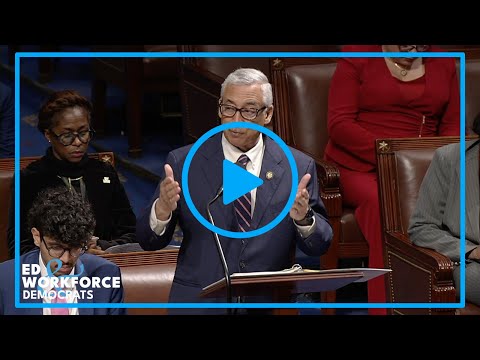
Unidentified member opposes 'Lower Health Care Premiums for All Americans Act,' citing AHP expansion and loss of consumer protections
Summary
An unidentified member of Congress spoke on the floor opposing the "Lower Health Care Premiums for All Americans Act," arguing it expands association health plans, limits regulation of stop‑loss insurance, and fails to extend ACA enhanced tax credits — risks that, the speaker said, could raise premiums and leave millions uninsured.
An unidentified member of Congress rose on the floor and opposed the "Lower Health Care Premiums for All Americans Act," saying the bill contains two partisan proposals that would weaken consumer protections and raise costs for many small employers and individuals.
The speaker said the first proposal "recklessly expands association health plans," which would let small employer groups and individuals join associations offering coverage that is "subject to fewer regulations than traditional plans in the individual and small group markets." The member warned that association health plans, or AHPs, would "make it easier for associations to cherry pick small employers with younger, mostly male workforces who are healthier and can be charged lower rates," leaving "small employers whose workers are older and sicker" behind in the traditional market and increasing their premiums.
The speaker also said, "if you pull healthy groups out, all of those left behind will be paying more," and added that, "if history is any guide, [AHPs] will show that they're more vulnerable to fraud and insolvency than those in the marketplace." These statements were presented as reasons to oppose the AHP expansion in the package.
On the second proposal, the member described a "self insurance protection plan" that would "prohibit the Department of Labor and states from ever regulating stop loss insurance," saying that would invite practices "that could hurt consumers and employers by creating loopholes for plans that will escape any regulatory oversight."
The speaker further criticized the package for not extending "the ACA enhanced tax credits, which are set to expire," contending that as a result "millions of people will...see their premium skyrocket" and "millions more won't be able to afford any insurance at all." The member urged that "if we bring up the bipartisan bill, we can afford that result," framing a separate bipartisan measure as a preferable alternative.
The member concluded remarks saying, "Mister speaker, I reserve the balance of my time." No other speakers or responses to these claims appear in the provided transcript segments.
The remarks in the transcript present a floor-level critique focused on (1) expansion of AHPs and related market‑segmentation risks, (2) limits on stop‑loss regulation and the role of the Department of Labor and states, and (3) the absence of an extension of ACA enhanced tax credits and the potential coverage and affordability consequences. The transcript does not record debate, votes, or any formal amendments to the bill in these segments.