
Appropriations chair touts bipartisan minibus; Democrats stress funding priorities and oversight
Get AI-powered insights, summaries, and transcripts
Subscribe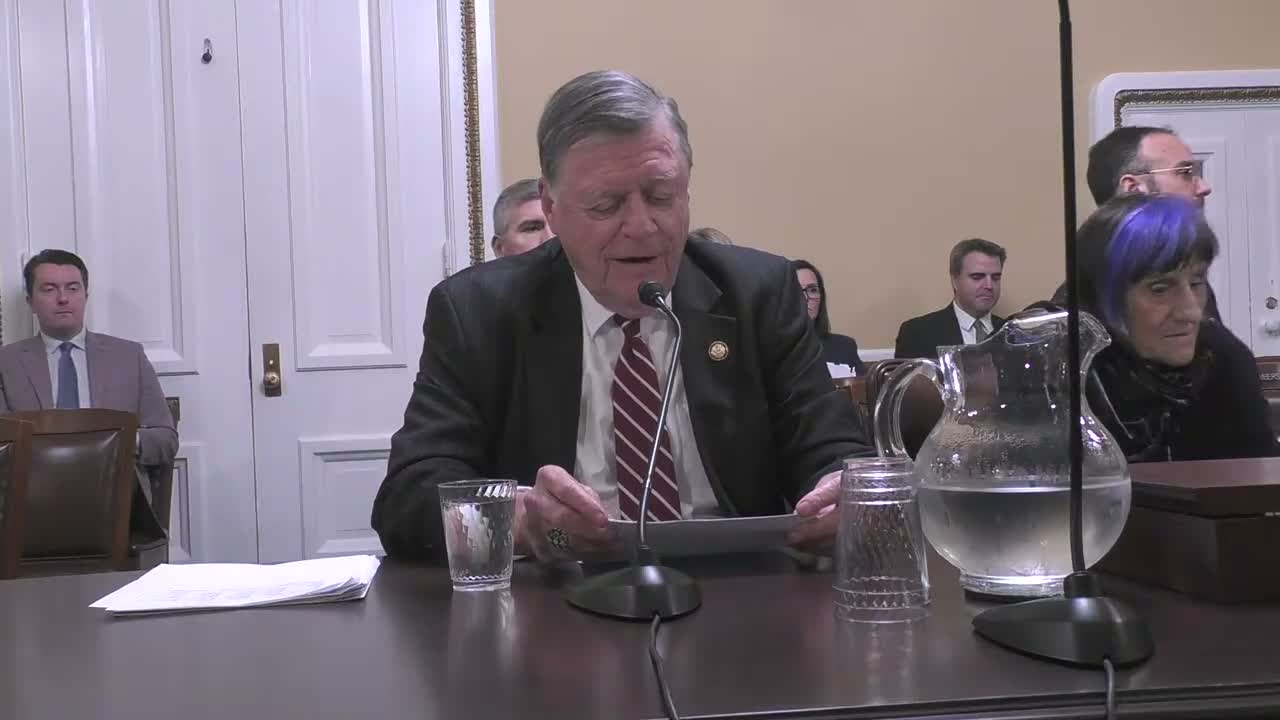
Summary
Chairman Cole and Ranking Member DeLauro told the Rules Committee HR 6938 is a bipartisan three-bill appropriations package funding commerce/justice/science, energy/water development, and interior/environment programs; members pressed for clarity on community project totals, NCAR protections, and the package's impact on energy and resilience programs.
Chairman Cole and Ranking Member Rosa DeLauro appeared before the Rules Committee to discuss HR 6938, a three-bill appropriations package for FY2026 covering commerce/justice/science, energy/water development, and interior/environment. Cole described the package as the product of bipartisan, bicameral negotiations that provide "full-year funding for many of our most crucial programs," including law enforcement programs, wildfire protection, and the National Weather Center.
DeLauro said the package protects Democratic priorities, rejects "poison pill" provisions and increases funding for energy-efficiency and resilience programs, citing figures such as $375 million for grid infrastructure and additional weatherization assistance funds. She argued regular-order appropriations preserve Congress's power of the purse and enable targeted investments in national parks, scientific research and environmental protection.
Members pressed witnesses on community-project funding totals and sources. Chairman Cole and DeLauro explained apparent discrepancies by distinguishing House-only totals from combined House–Senate figures and said projects are vetted and inspected for community need and conflicts of interest. Rep. Scott and others sought clarity on line-item totals; witnesses reiterated that the three-bill package includes member-requested community projects and that the larger $5.6 billion figure cited in discussion includes Senate-requested projects.
Rep. Neguse raised concerns about proposed cuts or changes to NCAR and said Senate holds had stalled the minibus previously; he asked that the chairs work to include bipartisan protections for NCAR. Chairman Cole agreed to work with members on language. The committee accepted witnesses’ full statements for the record; no votes were recorded in the hearing transcript and the chair recessed the committee subject to call.
The appropriations debate highlighted tensions between delivering near-term constituent projects through congressionally directed spending and guarding against fraud or political influence; witnesses emphasized new vetting rules and documentation requirements for community-project requests.