
County employees warn of strike; unions cite stalled bargaining and health‑care leverage
Get AI-powered insights, summaries, and transcripts
Subscribe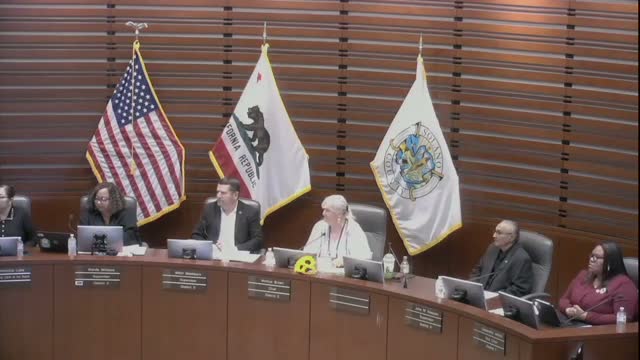
Summary
Union representatives and dozens of Solano County employees urged supervisors to return to bargaining, saying four unions filed strike notices and unfair‑labor‑practice charges and that proposed health‑care changes left some workers nearly $200 short in December pay.
Dozens of county employees and union leaders used the board—s public‑comment period to press Solano County supervisors to resolve stalled labor negotiations and to avoid a potential strike. Speakers representing IFPT Local 21, SEIU and other units described long negotiations, financial strain for families, and the filing of unfair‑labor‑practice charges.
Justin Decker, representing IFPT Local 21, told the board the unions "have been negotiating with the county for over 4 months" and that "we have recently filed unfair labor practice charges against the county due to its bad faith bargaining tactics." Decker added that the county—s withholding of its fair share of health‑care costs left some employees nearly $200 short in December pay.
Other speakers detailed how rising prices and chronic understaffing are affecting public services. Juliana, a behavioral‑health clinician, said her household finances are strained, listing mortgage and utility costs and urging the board to approve a fair contract. Linda Cheeseman, a member of the SEIU bargaining team, accused the county of paying an outside negotiator without authority to make decisions and said that the unions view delay and obstruction as the cause of the crisis.
Michael Kitsis, president of Local 21 unit 16 and a senior mental‑health manager, raised specifics about comparative offers, saying the county—s proposal is "5% less than surrounding counties over the next 3 years" and predicted later equity adjustments would be required. Multiple speakers characterized the county—s health‑care timing and offer package as a bargaining tactic that pressures employees and their families.
Speakers asked for direct participation by decision makers at the bargaining table. "We need decision makers at the bargaining table now," Decker said. Linda Cheeseman warned that if bargaining continues to stall, a strike becomes a last resort rather than a goal.
The public comment period produced repeated appeals for the board to return to good‑faith negotiations, to consider immediate steps to address retention and recruitment, and to remove health‑care costs from the leverage of the bargaining process. Board members acknowledged the comments and the closed‑session items on labor negotiations that followed the public meeting. The board moved to closed session on labor negotiators pursuant to Government Code section 54957.6 later in the agenda.