
House Rules hearing spotlights debate over Shower Act that would codify agency change for showerhead rules
Get AI-powered insights, summaries, and transcripts
Subscribe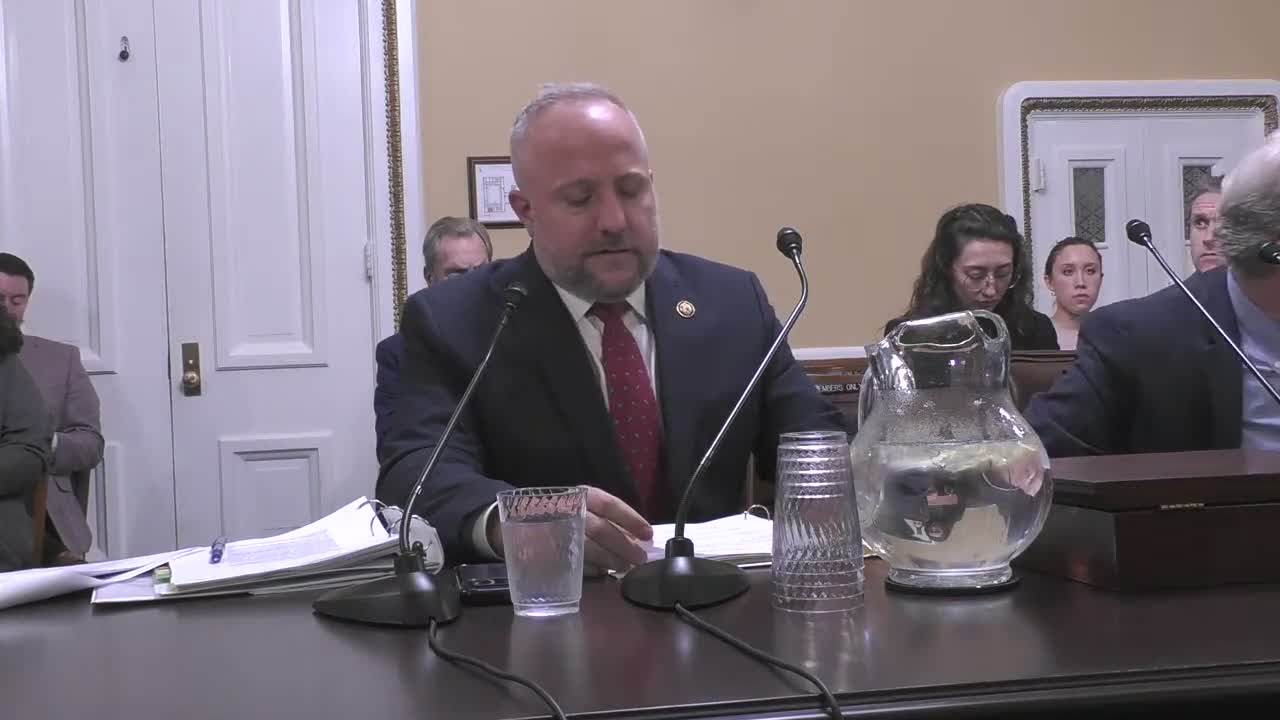
Summary
Representative Russell Fry defended HR 4593, the Shower Act, saying it would codify a narrower definition of 'showerhead' to restore consumer choice and regulatory stability; Democrats warned the change could undo energy- and water-saving standards already rescinded by executive action and questioned prioritizing the bill.
Chairwoman Fox opened a House Rules Committee meeting to consider HR 4593, HR 5184 and HR 6938 and introduced Representative Russell Fry, who testified in favor of HR 4593, the "Shower Act." Fry told the committee the bill would "deliver regulatory stability by codifying the definition of a showerhead" consistent with American Society of Mechanical Engineers standards and apply the federal 2.5 gallons-per-minute limit to individual fixtures rather than whole shower systems. "This will clarify the maximum flow rate, to apply to each faucet, allowing consumers to have the products and water flow that they desire," Fry said.
Fry argued the current regulatory approach has shifted with administrations, creating uncertainty for manufacturers. He said the prior interpretation that treated an entire shower system as the regulated unit had "misled American consumers and impacted the quality of the products they are intending to buy." Fry framed HR 4593 as returning authority to consumers and reducing what he described as "duplicative" interpretations.
Ranking Member Pallone and other Democrats disputed that framing. Pallone said energy-efficiency standards save money over a product's lifetime and warned that repealing or codifying the rescission of standards risks higher utility bills and greater water use for some households. He told the committee that the DOE standard at issue is projected to save manufactured-home residents about $475 a year on average and cautioned against focusing on upfront costs alone.
Rep. Neguse questioned the timing and prioritization of the bill, noting that the Department of Energy had already moved to rescind the rule at issue via executive action and that HR 4593 would effectively codify that agency decision. Multiple members pressed the author on whether the issue had arisen in town halls and whether a Congressional Budget Office score exists; Fry said he had held town halls and affirmed the bill focuses on consumer choice, and members acknowledged a CBO score was not available during the hearing.
The committee record will include submitted statements from witnesses. No formal vote on HR 4593 is recorded in the hearing transcript; the chair recessed the committee subject to call at the close of the session.
The hearing continues the broader debate over when federal regulation improves long-term affordability versus when it raises upfront costs and whether authority for appliance and housing standards should rest with federal agencies or be clarified by Congress. The Rules Committee did not take a final recorded vote during the hearing; the next procedural step will depend on scheduling by the committee leadership.