Get Full Government Meeting Transcripts, Videos, & Alerts Forever!
Get email alerts on the Organized Retail Crime topic
No spam. Unsubscribe anytime.
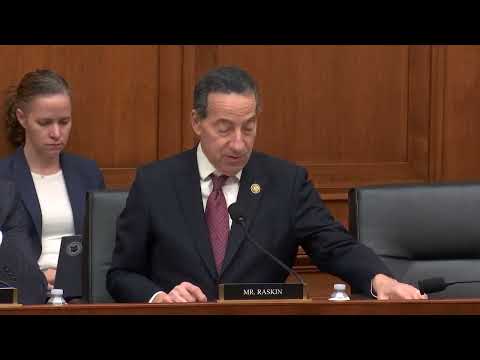
House Judiciary committee member urges national response to organized retail crime
Summary
A member of the House Judiciary Committee told a witness panel that organized retail crime is a multibillion-dollar, technology-enabled industry that exploits gaps between state and federal enforcement; the member called for standardized national data and a nimble federal task force.
A member of the House Judiciary Committee opened a hearing on organized retail crime on the committee’s agenda and warned that the problem has outgrown local responses. "This is not petty shoplifting by middle school students," the committee member said, describing the activity as "a multibillion dollar industry" that uses technology to coordinate thefts and resale.
The member said organized retail criminal networks recruit people to steal specific merchandise, sometimes covering travel expenses, then fence the goods online and ship them across state and international lines. He described visible incidents — including "smash-and-grabs" and mobs raiding cargo containers — as only "the tip of the iceberg," and said many schemes hide from law enforcement by exploiting multiple platforms and jurisdictions.
As an example of the methods used, the member explained how thieves take hundreds of gift cards, remove labels to capture unique codes, return the cards to store shelves and later use software to drain any balances after unsuspecting customers purchase them. The member cited sample amounts such as $50, $100 and $500 to illustrate how the scam can affect ordinary consumers.
The committee member said state and local law enforcement are the "first line of defense" but lack the resources and cross-jurisdictional authority needed to dismantle these networks. He added that federal prosecutors generally prioritize the largest, most brazen schemes — those involving tens of thousands of dollars or large cargo thefts — which leaves many organized retail theft cases in an enforcement gap.
To address those gaps, the member urged two specific steps: standardized national data and improved coordination across law enforcement. "If we're gonna tackle this problem, we need standardized national data utilizing a consistent, widely accepted definition of organized retail crime," he said, and described a national task force as a tool "to find broader patterns in local incidents and conduct complex investigations across state lines." He said any such task force should be nimble enough to follow evolving criminal methods.
The member also referenced recent federal legislation, saying that when Congress passed the Informed Consumers Act in 2022 it increased transparency on certain online platforms but that perpetrators shifted operations to smaller platforms not covered by the law, reducing the statute’s reach.
The remarks were opening comments to a panel of witnesses invited to share expertise on enforcement and prevention strategies; the transcript records no formal committee votes or adopted measures in this portion of the hearing. The member closed by thanking the witnesses and yielding back.
The committee hearing continues with witness testimony and discussion of possible policy responses to the enforcement gap described by the member.