Lifetime Citizen Portal Access — AI Briefings, Alerts & Unlimited Follows
Senate EPW hearing: Senators press EPA for clear PFAS disposal standards and liability safeguards
Loading...
Summary
Senators and witnesses at the Senate Environment and Public Works hearing urged the EPA to set practical PFAS disposal thresholds, warned that unclear rules are raising infrastructure costs and deterring bidders, and debated whether Congress should legislate liability protections for passive receivers such as contractors and municipal utilities.
Chair Capito opened the Senate Environment and Public Works hearing saying the committee would examine how PFAS cleanup and disposal affect billions of dollars in infrastructure investment and why a lack of clear standards is choking projects and raising costs. "Today, we'll discuss another part of the PFAS problem, how PFAS cleanup and disposal directly affects billions of dollars in infrastructure investment," she said.
The hearing focused on three related problems: inconsistent disposal acceptance by landfills and insurers, the absence of implementable federal screening levels for soil, and uncertainty over who can be held liable once sites are designated under CERCLA (Superfund). "Landfills often will not accept soil unless the soil is tested for PFAS because insurance companies won't provide coverage to the landfill operator," Capito said, describing a cascade that inflates bid contingencies and can leave projects without qualified bidders.
Industry and contractor witnesses described operational impacts. Leah Pilconis, general counsel for the Associated General Contractors of America, told the committee that "contractors need reasonable liability protections and a clear workable path to compliance when they encounter PFAS during construction activities." Pilconis said contractors, who she said are not PFAS polluters, face higher trucking, disposal, testing and insurance costs and sometimes must haul lightly contaminated soil hundreds of miles to hazardous-waste facilities.
Eric Gerstenberg, co-CEO of Clean Harbors, argued there is sufficient tested technology to destroy PFAS at scale for highly contaminated materials and urged EPA to establish thresholds that specify when materials must go to high‑temperature RCRA‑permitted incinerators versus landfills. "We believe that high temperature RCRA permitted incinerators are cost effective for AFFF," Gerstenberg testified, describing recent testing in Utah done with EPA participation.
Kate Bowers, supervisory attorney at the Congressional Research Service, provided legal context. She said the EPA's April 2024 designation of PFOA and PFOS as hazardous substances under CERCLA unlocks Superfund authorities but "designation does not trigger a cleanup action" or set disposal standards. Bowers explained that EPA enforcement discretion and settlement agreements can protect some passive receivers but may not shield them from state enforcement or third‑party lawsuits in every case.
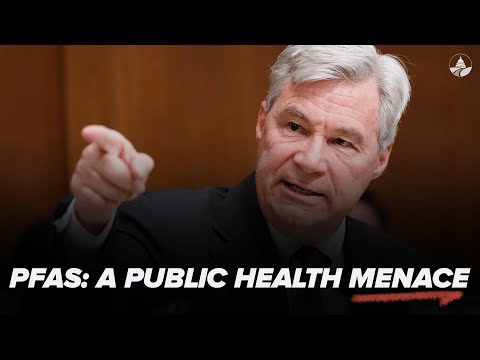
Senators pressed witnesses on trade‑offs. Several members, including Sen. Whitehouse and Sen. Markey, warned that broad statutory exemptions could undercut Superfund's polluter‑pays principle and risk shifting cleanup burdens to affected communities. Others, including Sen. Ricketts and Sen. Curtis, urged statutory protections or codified EPA policies to avoid driving contractors and water systems off bids and to prevent large cost pass‑throughs to taxpayers and ratepayers.
The witnesses and senators converged on two durable requests: that EPA issue clear, implementable disposal and reuse standards and soil screening levels, and that Congress consider legislative options to protect bona fide passive receivers while preserving means to hold major contributors accountable. Chair Capito suggested the Brownfields precedent and administrative settlements could inform interim protections but said Congress may need a permanent statutory fix modeled on earlier brownfields amendments.
The committee asked for follow‑up written questions and responses; senators were invited to submit questions by Dec. 3 and witnesses' responses were due by Dec. 17. The hearing closed without votes.