Get Full Government Meeting Transcripts, Videos, & Alerts Forever!
Get email alerts on the Water Infrastructure topic
No spam. Unsubscribe anytime.
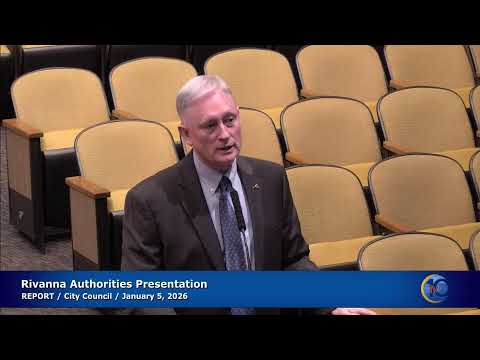
Rivanna authority briefs council on major water projects, biosolids and recycling programs
Summary
Rivanna Water & Sewer Authority told council it treats and produces about 10 million gallons daily, is expanding Ragged Mountain capacity and building a central waterline, and plans a lithium‑battery recycling program; staff also reported prior plant restoration costs and project timelines.
The Rivanna water and wastewater authority updated Charlottesville City Council on operations, capital projects and resilience planning, outlining multi‑hundred‑million‑dollar infrastructure needs to meet current and projected demand.
Executive director Bill Moyer said the authority manages five reservoirs and several treatment plants and that the system produces and treats roughly 10,000,000 gallons per day. He described ongoing capital projects including a pipeline to move water from South Rivanna to Ragged Mountain Reservoir that will allow the authority to add 12 feet of storage (an increase of about 700,000,000 gallons) and a central waterline project to distribute treated water across the urban service area; the pipeline construction is underway and phase work is expected to take years to complete.
Moyer also described wastewater operations: biosolids are dried and sent to a composting facility in Waverly, Va.; the authority produced about 15,000 tons of biosolids in 2024. He said the authority is initiating a lithium-battery recycling program at the Ivy transfer station in response to fires in transfer trailers and facilities and that the board has approved procuring a fire‑rated container and starting the program as soon as procurement completes.
On emergency repairs, Moyer reported a January 2024 plant failure required about $14,000,000 in restoration; insurance covered about $10,000,000 and the authority paid approximately $4,000,000 for additional improvements. Councilors asked about routing for the central waterline where it touches city property near 0 East High Street; Moyer said typical easement widths for major pipes are roughly 40 feet and that staff aim to align the infrastructure along the western property boundary to reduce impacts to parklands and private property where feasible.
Moyer also said the authority coordinates with county and UVA planning on large development and potential high‑demand users (data centers) and that supply planning includes storage, treatment capacity and piping; the authority conducts ten‑year supply/demand studies including bathymetric reservoir surveys to inform capital planning.
What’s next: The authority will continue design and easement requests for the central waterline, advance tree‑impact surveys and bring site plans to NDS for review; the authority will also move forward on recycling and lithium battery programs.