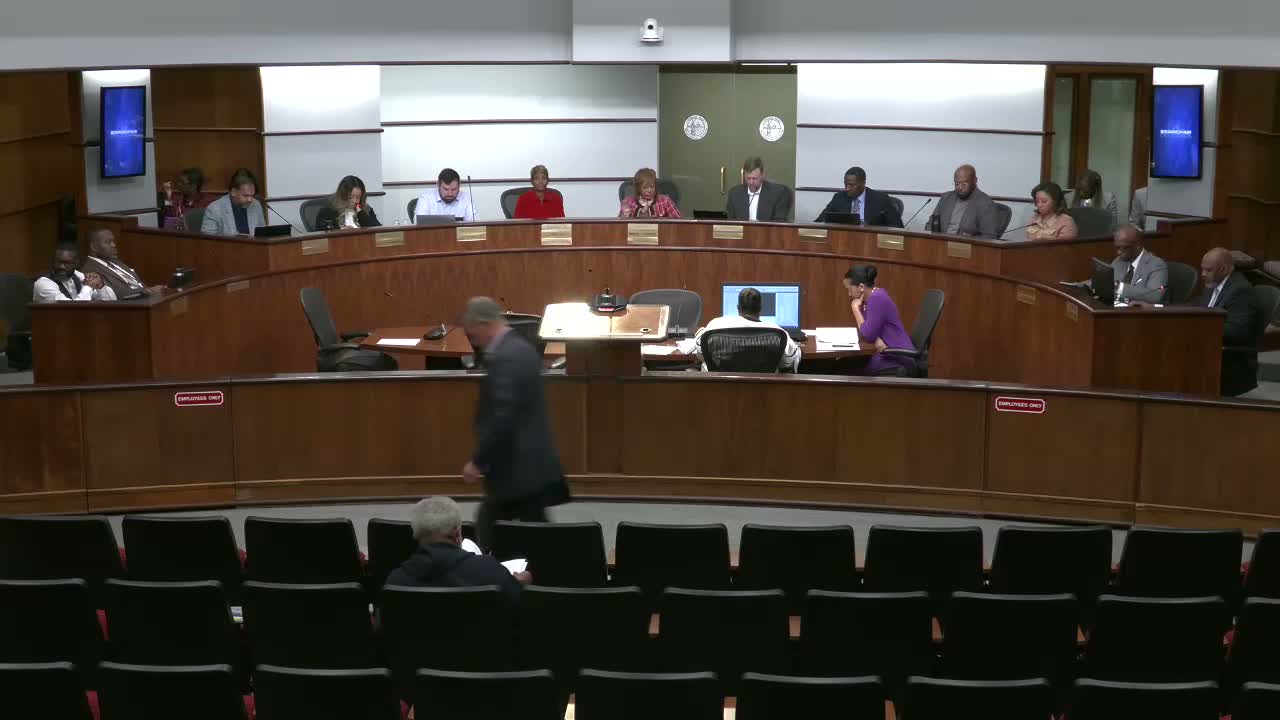
Council adopts 2026 legislative priorities, backs new tools to address blight
Loading...
Summary
Birmingham's council approved a package of 2026 legislative priorities that include a vacant property registry, a registration fee, shortened redemption windows for delinquent tax properties, a Birmingham Housing Trust Fund, and support to permit a blight-remediation assessment for class 1 municipalities.
Birmingham City Council on Jan. 6 voted to approve the city's 2026 legislative priorities, a package that includes measures aimed at addressing abandoned and blighted properties.
The resolution describes multiple priorities: shortening redemption periods for delinquent tax properties; enabling class 1 municipalities to create a vacant property registry and charge a registration fee; authorizing reasonable enforcement of maintenance standards; supporting creation of a Birmingham Housing Trust Fund; encouraging community land trusts and affordable housing initiatives; and seeking legislative review of a constitutional amendment to permit a blight remediation assessment against certain landowners.
Councilor Clinton Woods, who brought the blight-assessment language to the agenda in committee, said the change is intended to "add more teeth" to the city's enforcement tools and to shift costs to absentee owners who leave properties in disrepair. "We've gotten some legislation passed previously, but this would allow us to basically increase [taxes] on those people who are not taking care of their properties," he said, and described a community development fund where increased collections would be used to remediate similar problems.
Several members voiced support and asked for examples of other cities that have passed similar measures; Councilor Woods said he would provide examples and additional information. Councilor Crystal Smitherman and other members also raised broader governance issues during the discussion, including the mayor–council relationship and the council's role in budget balance.
The council approved the legislative priorities package; the clerk noted the items had been discussed and approved previously in the Committee of the Whole. The proposed state-level changes now advance to the legislative session beginning Jan. 13, 2026, where members noted it will be a short session and priorities will need to be triaged.
Why it matters: The requested statutory changes would expand municipal authority to register, charge, and enforce standards on vacant or blighted properties and could create a local dedicated fund for remediation work. Council members said the changes are designed to reduce the burden on city services and hold absentee property owners financially accountable.