Wooster council gives first reading to broad residential zoning rewrite
Loading...
Summary
Council held a first reading of Ordinance 2026-01 to revise the residential zoning code and official map, introducing two 'transition' districts and proposing to merge R-2 into R-1 with smaller-lot standards to allow more multifamily and duplex-style housing; a public hearing will be required before further action.
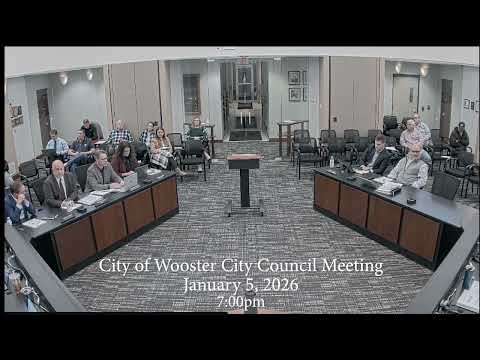
Wooster City Council held a first reading on Jan. 5 of Ordinance 2026-01, a comprehensive update to the city's residential zoning code and official zoning map intended to increase housing capacity and allow more housing types in existing neighborhoods. Mister Hussain introduced the measure, saying it was prepared under the purview of Mister Marion and carries a full recommendation from the planning commission.
Mister Marion described the core changes as creating two new 'transition' zoning districts that would allow greater flexibility for multifamily development — including duplexes, triplexes and stacked units — and revising single-family districts so the current R-2 standards become the citywide R-1 standard in many areas. "They're called transition districts that will allow for greater flexibility of use in terms of multifamily, duplexes, triplex, biplex, stacked higher in some areas," Marion said, noting some revised lot-size and setback standards would make it easier to build additional units in established neighborhoods.
Council members asked whether the city can estimate how many additional lots or units these changes would create. Marion said staff can provide comparative analyses showing how recent developments would have differed under R-1 versus R-2 standards and promised to produce an area estimate by the next meeting. The ordinance was left on first reading so the laws and ordinances committee can hold the required public hearing and give council time to digest the draft.
The mayor and several council members framed the zoning package as one of the most consequential pieces of legislation expected this year, saying the changes are intended to spur reinvestment in existing residential neighborhoods and increase the supply of more affordable housing types over time. The council did not vote on final passage; the measure will return for further committee review and a public hearing before any second reading or vote.