After audit, Ketchikan school board and borough plan liaison meetings, internal review and amended budget to address $5.4M liability
Loading...
Summary
In a work session the board and borough discussed a $5.4 million liability owed to the borough. Borough manager Ruben Duran proposed an internal operational review (BDO), monthly liaison meetings, and converting the liability to a long‑term note; the board agreed to pursue the borough audit, explore forensic/operational audits, and prepare an amended budget for Dec. 17.
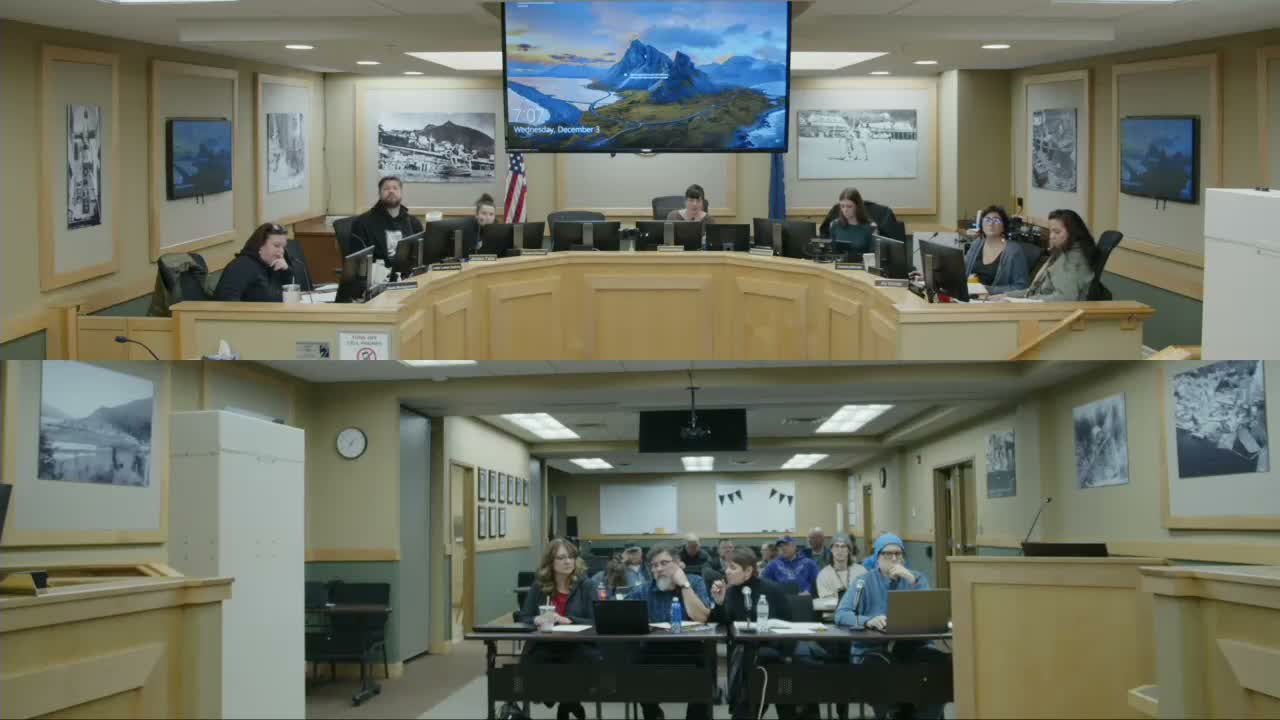
Following the audit presentation, the board entered a work session to focus on the $5.4 million liability the district shows as due to the borough and to identify next steps for oversight and repayment.
Borough Manager Ruben Duran told the board that the borough is not disputing the auditors’ accrual accounting but said the borough’s review points to systemic cash‑flow and spending practices by the district. “Where did the cash come from?” Duran asked, arguing the district has too often drawn on future dollars and deferred payments, creating the accruals that now appear as liabilities. He said the borough has asked BDO to perform an internal operational review and is preparing monthly liaison meetings to improve real‑time data sharing.
Auditors and finance staff discussed the mechanics: the district and borough operate a shared central treasury and an internal service fund for health insurance; large claim years (notably FY24) drove a spike in costs that the borough pays and then allocates to the district’s books. Auditors recommended monthly reconciliations and closer communication so the district can monitor year‑to‑date claims and avoid surprise deficits.
District finance director Daniel Schuler presented a preliminary cash‑flow analysis through Nov. 30 showing the district slightly better than the prior year but running health‑insurance costs above budget (reported year‑to‑date ratios above 110–120 percent of budgeted expectations). Schuler said, if current claim averages hold, the district could be at risk of running short of cash near June and recommended options such as asking the state to move up a foundation payment or considering a fully insured plan for future fiscal years.
Board members pushed for immediate controls: several urged a freeze on nonessential spending until the board receives an amended budget and clearer cash‑flow statements; others proposed an operational audit first, and a forensic audit only if evidence of wrongdoing is suspected. The borough signaled willingness to convert the $5.4 million short‑term liability into a multiyear note, spreading repayment over time, and to help design tighter reconciliation procedures.
Next steps agreed by both bodies include: the district will participate in the borough’s planned BDO audit; the board’s finance committee will define the monthly reporting and approval process for budget transfers; staff will present a full amended budget and proposed transfers at the Dec. 17 board meeting; and a health‑care task force will be convened to evaluate insurance plan options.
The liaison committee between the borough and the school board will meet monthly to review LEF (Local Education Fund) activity, claims, and cash flows. The borough expects to seek Assembly approval for the internal review and indicated the review could report back by February.