Brokers and APRA outline borough insurance program, note major claims and risk-control services
Loading...
Summary
Alliant and the Alaska Public Risk Alliance briefed the assembly on borough coverages including a $100 million airport liability policy, marine vessel hull coverage, and recent large claims (South Tongass fire). APRA highlighted training, legal-fee reimbursements and grant credits that could reduce borough premiums.
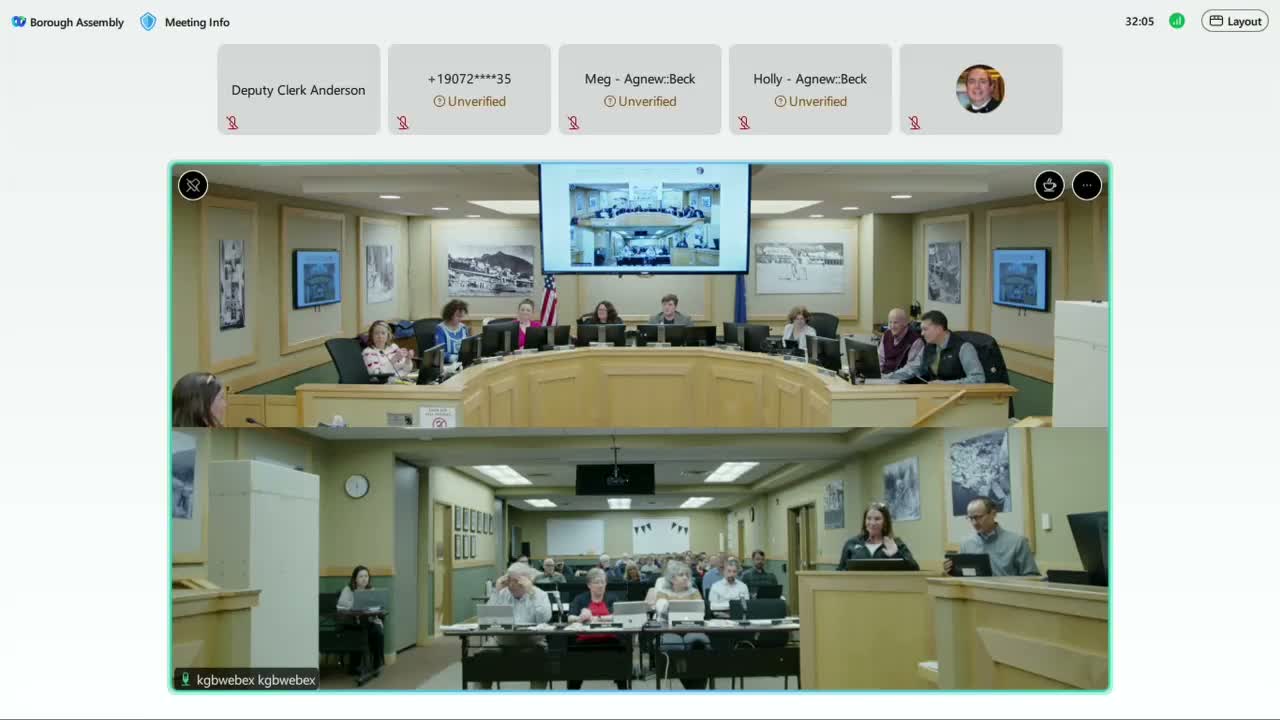
Insurance brokers and the newly formed Alaska Public Risk Alliance (APRA) presented an overview of the borough's coverages, recent claim activity and member services at the Dec. 15 assembly meeting.
Alliant Insurance Services (co-broker) described the borough’s marine program (four vessels, including the primary ferry), liability structure providing up to $10 million in layered limits, and physical-damage coverage that represents a large share of premiums. Brian White (Alliant) said vessel valuation is typically determined by condition-survey and reflects an actual cash value approach rather than replacement cost.
APRA representatives described the July merger that created the pool and said APRA handles shared self-insurance for Alaska public entities. Kyle Harden (APRA) and Carlene Mitchell (APRA risk services director) summarized open claims and projected payouts: APRA reported it has paid roughly $4.3 million so far for South Tongass Fire Station losses and anticipates additional claims of several million dollars as construction and procurement invoices are reviewed. They said Iron Shore is leading work on the Point Higgins fuel spill claim (Iron Shore policy limit cited near $2 million) and that contractors have assumed substantial responsibility to date.
APRA emphasized risk-reduction services available at no extra cost to members, such as on-site risk assessments, an online learning management system (Vector Solutions) that yields premium credits, law enforcement consultation by a contracted expert, a safety grant ($2,000 for the borough this year), ballistic-vest and legal-fee reimbursement programs and professional-boundaries training for organizations that serve youth. APRA estimated that if the borough completed eligible credits it could receive a refund in excess of $36,000 in June 2026.
Assembly members asked whether parametric insurance (indexed products addressing flood/earthquake triggers) could be tailored to landslide or rainfall triggers; Alliant said parametric structures are customizable and could be designed to address rainfall-related triggers that result in landslide. Members also asked how claims affect member contributions; APRA explained contributions are determined by frequency and severity with modifiers applied against base rates.
No formal action was taken; staff and APRA said they will follow up on specific coverage questions.