
South 32 tells Santa Cruz supervisors one exceedance prompted retest and plant upgrades; residents press for stronger monitoring
Get AI-powered insights, summaries, and transcripts
Sign Up Free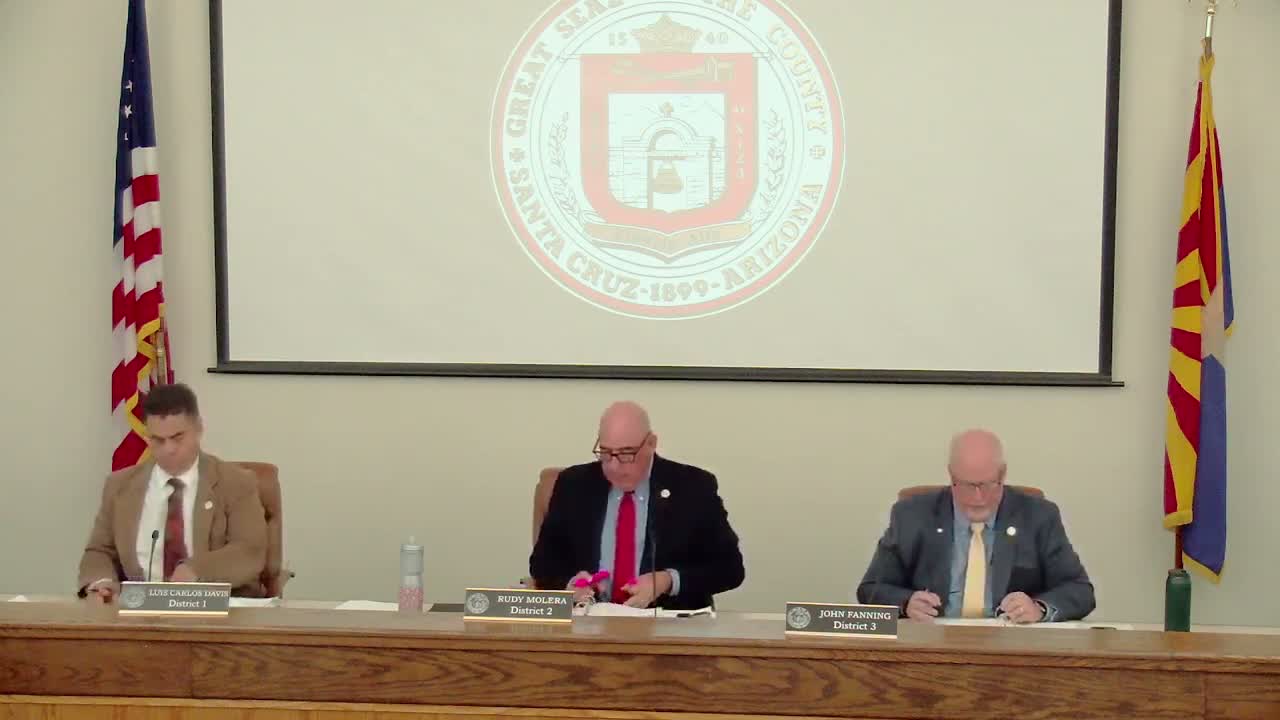
Summary
At a Jan. 2 study session, South 32 president Pat Reisner said a single monthly grab sample above the 6 ppb antimony limit was retested and is being addressed with a plant modification; residents and local hydrogeologists pushed for clearer ADEQ reporting, broader monitoring and stronger community protections.
Pat Reisner, president of South 32 Hermosa, told the Santa Cruz County Board of Supervisors on Jan. 2 that the company found one Aquifer Protection Permit (APP) grab sample above the 6 parts‑per‑billion antimony limit and immediately ordered a retest, reported the result to the Arizona portal and to ADEQ, shut the higher‑antimony well offline and is implementing a second‑phase treatment modification to increase antimony removal.
The exchange grew out of an extensive public‑comment period in which residents and independent experts urged faster action and clearer reporting. Hydrogeologist Chris Gardner told the board that sampling and publicly available data show antimony concentrations above permanent limits several times since October 2024 and warned that discharges could mobilize contaminated sediments downstream toward private wells. Gardner described subreaches of Harshaw Creek where conductivity and dissolved solids increase and said some local well results exceeded drinking‑water standards.
Reisner said the plant, which began service in August 2023, operates under two distinct permits with different sampling methods: a surface‑water permit that uses an 8‑hour composite and an APP that requires a monthly grab sample. He acknowledged the differences matter when comparing a single grab sample to a health standard set by the U.S. Environmental Protection Agency (which assumes chronic lifetime exposure). "One grab sample compared to a health standard that was established based on drinking 2 liters of that water every day for their entire life is not necessarily a great comparison," he said.
Reisner said the company received a November 26 lab result showing an APP grab of 6.23 ppb and an 8‑hour composite the same day of about 5.73 ppb. "We asked the lab to retest just to make sure," he said, adding that the retest confirmed the app result above 6 ppb. He said South 32 posted the lab sheet online on Nov. 29 and phoned the reporting number in the permit, leaving voicemails and phone records that the company later provided to ADEQ after the agency told the company it had no notification on file.
Pat Reisner defended the plant design and its flexibility to be modified. He described the technology as common (sand‑ballasted clarifiers; chemical precipitation) and said the company is implementing a supplemental antimony‑removal phase expected to increase removal efficiency by roughly 60% or more. "We have the ability to monitor what's coming in ... and when we saw an increasing trend ... we reacted," he said, noting the high‑antimony well was shut off and will remain off until the upgraded treatment proves effective.
South 32 also said it engaged an independent toxicologist to assess human‑health risk. Reisner summarized her conclusion: chronic averages are the most appropriate comparator to drinking‑water standards and, based on 2025 data, the average antimony concentration at the plant was 3.2 ppb and the downstream Harshaw Creek average about 2.5 ppb — both below the 6‑ppb benchmark. He said the firm will continue quarterly updates to the board and work with ADEQ on clearer reporting codes.
Residents pushed other remedies: Robin Lucky of the Calabasas Alliance asked for an ordinance preventing industrial entities from supplying treated water directly to private wells; others asked for a public, independent sampling program and clearer CPBA protections to address property‑value, health and environmental risks. Susan Wethington, who told the board she has lived without potable well water since 2022, said her well tests showed antimony at roughly double the drinking‑water limit and that the Arizona attorney general has requested her documentation.
The board heard requests for improved transparency and remote access to meetings so affected residents can participate. Supervisors thanked staff for organizing a three‑part series (South 32, ADEQ, and an independent presentation) and asked that South 32 and ADEQ clarify reporting steps and contact routes for exceedances.
What happens next: South 32 said the high‑antimony well will remain offline until the plant modification is installed and tested; the company said it will return with updates in subsequent quarterly reports and that ADEQ will present at a follow‑up meeting. The county and community groups raised the option of using the CPBA process to supplement regulatory requirements, including monitoring and notification protocols.