Get Full Government Meeting Transcripts, Videos, & Alerts Forever!
Get email alerts on the Mandatory Connections topic
No spam. Unsubscribe anytime.
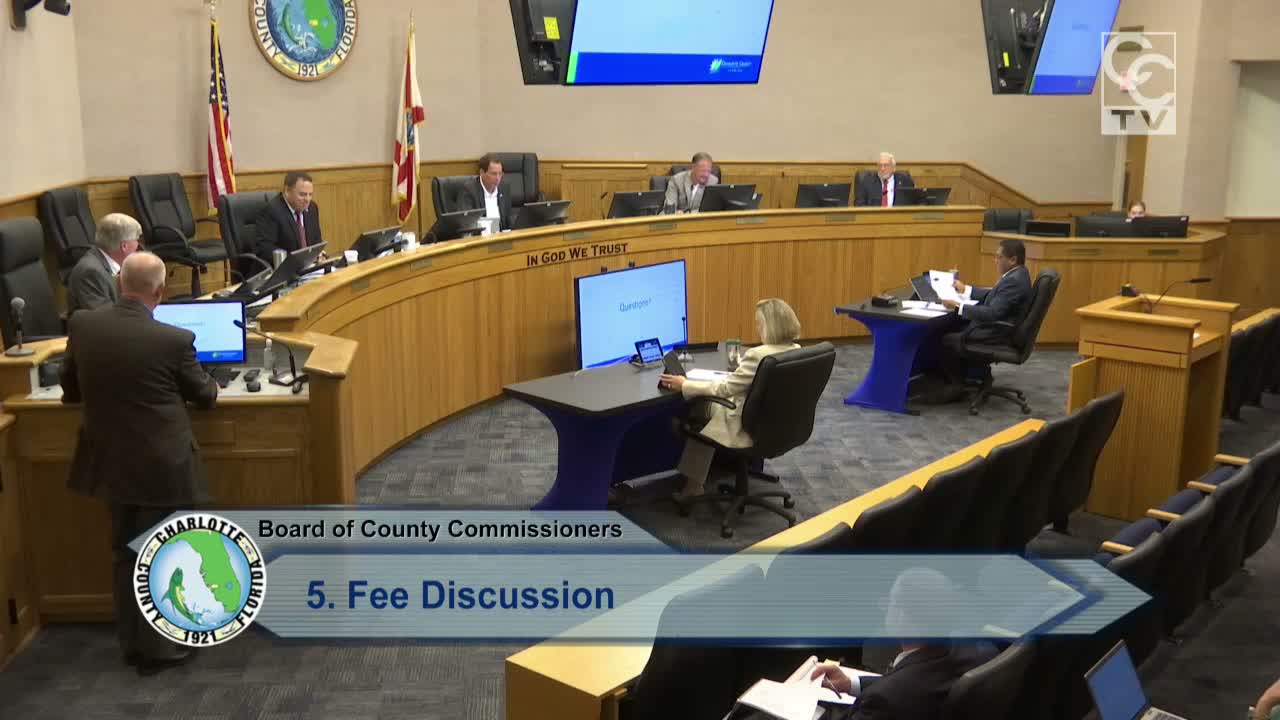
Commissioners debate mandatory sewer hookups and loan program as 600 customers wait
Summary
Charlotte County staff reported about 600 properties have pending mandatory sewer connections dating to COVID, with roughly $644,000 outstanding in active loans; commissioners debated moving installation responsibility to homeowners, tightening loan limits, and creating hardship options.
Jeremy Frost, operations manager for utilities, told the board that mandatory sewer connections have not been enforced since 2019 and a backlog of about 600 mandatory connections remains. Frost said completing the work in‑house would require roughly three days per home and roughly 1,800 man‑days of effort.
"We are not anywhere near the cost of what it actually costs to install it," Frost said, describing a loan program that currently requires homeowners to put 10 percent down and allows financing of the remainder (commonly over seven years). Frost noted the utility has about 136 active loans with a total balance of about $644,000 outstanding.
Commissioners pressed staff for alternatives. Commissioner Doherty said he favors getting the utility to the right‑of‑way and letting homeowners hire private plumbers to complete the in‑home work: "I personally think it'd be better to get on with this thing ... make sure they have a point of connection, and then let the property owners hire their own plumbers." Commissioner Constance and others agreed staff should evaluate private‑sector options and hardship assistance before committing utility labor and long‑term loan exposure.
Board concerns focused on fiscal sustainability and customer hardship. Commissioners asked staff to return to a focused financial meeting to: (1) quantify the utility’s capacity to underwrite loans if many homeowners apply at once; (2) model a first‑come, first‑served or cap approach; and (3) identify private‑sector or human‑services programs that could help income‑constrained residents.
What’s next: staff agreed to prepare detailed options for an upcoming finance meeting, including scenarios that limit utility loan exposure, allow homeowner‑installed plumbing to the right‑of‑way, and identify potential means‑tested assistance.