Get Full Government Meeting Transcripts, Videos, & Alerts Forever!
Get email alerts on the Code Enforcement topic
No spam. Unsubscribe anytime.
Charlotte County magistrate issues fines, cease-and-desist orders and compliance windows across dozens of code-enforcement cases
Summary
At a May 7, 2025 Charlotte County special magistrate hearing, the magistrate found numerous properties in violation of county and state codes, imposing fines (typically $70–$9,020), ordering abatements and issuing multi‑year cease-and-desist orders for repeat commercial violators while granting permit-based windows to bring properties into compliance.
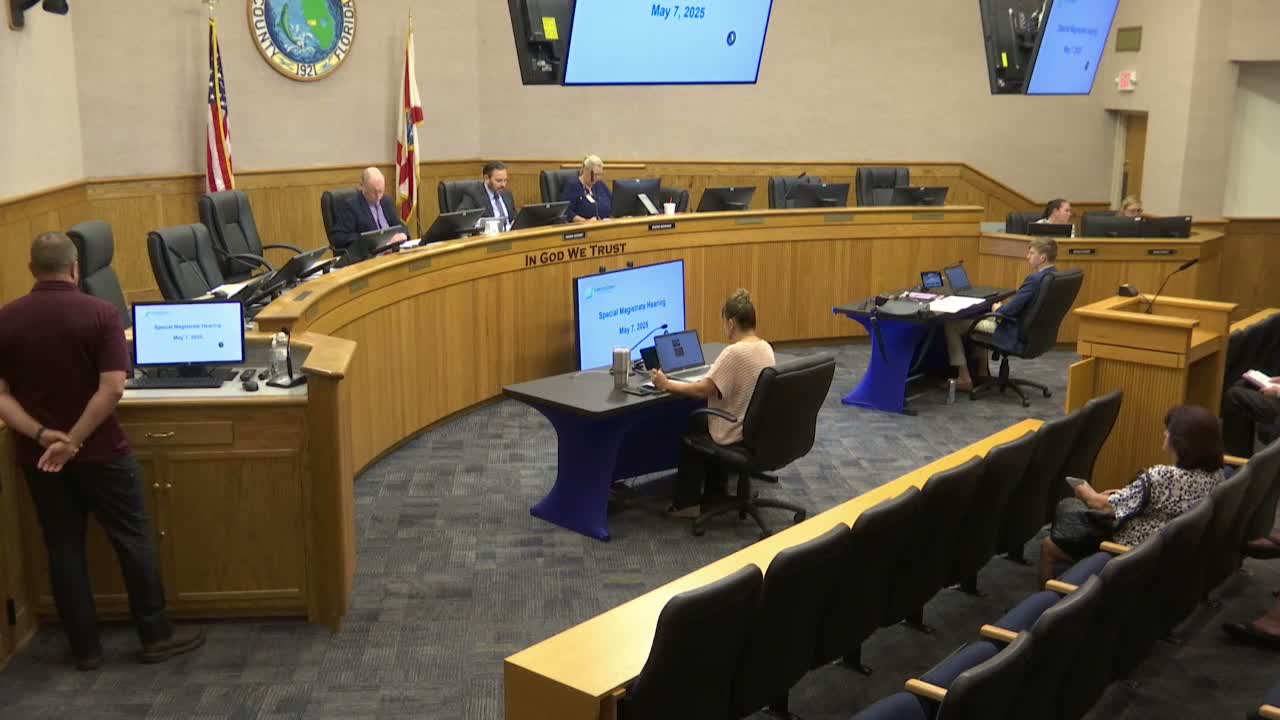
Special Magistrate Morrison presided over a Charlotte County Code Enforcement special magistrate hearing on May 7, 2025, resolving dozens of cases that ranged from routine property‑maintenance violations to large commercial outdoor‑storage disputes. The magistrate repeatedly stressed that “the goal here is compliance” and issued a mix of fines, compliance deadlines and abatement or cease‑and‑desist orders depending on the case and the respondent’s progress toward permits or remediation.
The hearing blended three tracks: conflict cases (where a magistrate had prior involvement), a consent agenda of affidavits of noncompliance (cases previously adjudicated and reinspected) and a lengthy new‑business docket. County code officers presented photographic evidence and inspection histories while respondents often described financial hardship, hurricane-related delays, contractor or permit problems, or steps taken to remedy violations. In uncontested matters magistrate findings typically imposed one‑day fines ($70 or similar processing amounts), followed by larger 90‑day fines if the violation persisted; repeat, commercial or environmental concerns drew multi‑year cease‑and‑desist orders and abatement awards.
Notable outcomes
- COD2301735 & COD2301736: The magistrate upheld county reinspections and imposed 90‑day fines of $9,020 on properties cited for prohibited uses and junk‑like conditions after testimony that rezoning or plan amendments were still pending. County officer Jason Czechlinski presented the reinspection evidence; attorney Michael P. Hammons described permit and engineering delays tied to post‑Ian recovery.
- PUO2400002 (Donahue): Dustin Donahue objected to a mandatory hookup to Charlotte Harbor Water Authority, saying he upgraded an on‑site well and could not afford the quoted connection costs; the magistrate found the respondent out of compliance with the prior order and imposed a $70 fine while directing the parties to work out hookup details with the water authority.
- DOH/pump‑out cases (multiple): For addresses flagged by the Florida Department of Health, Alex Trammell and county officers testified that pump‑out or inspection permits remained lapsed; magistrate orders typically gave 30 days to comply or face $100‑per‑day fines.
- COD2402189 (Marcelli Enterprises, South Access Road): A repeat commercial outdoor‑storage case carried a second‑ANC fine of $45,020. Engineer Mary Sprague said notices had been misdirected previously; the board of zoning appeals denied a special exception and the owner intends to pursue site‑development plans to enclose outdoor material storage. The magistrate entered the county’s fine request but signaled willingness to consider reductions if demonstrable site‑development progress is made.
- COD230009 / COD2302962 (John Good): Multiple properties tied to John Good were subject to abatement and recorded costs totaling $13,665.06 following hoarding‑related junk conditions, structural damage and a recent fire; the magistrate stressed public‑safety risks and encouraged human‑services referrals to assist remediation.
- COD2500252 (3120 Waterside Drive): Given ongoing commercial‑scale violations and complaints, the magistrate imposed a 15‑day compliance window, awarded abatement costs to the county and issued a five‑year cease‑and‑desist order.
How the process will proceed
For many respondents the magistrate granted a compliance window tied to permit activity (when permits are applied for and active cases typically go into abeyance). The hearing record shows a consistent pathway: reinspections on a roughly 90‑day cycle, reduced fines once code compliance is confirmed and potential foreclosure/abatement risk for commercial properties that remain noncompliant. Respondents advised to document cleanup with photographs and to maintain contact with the assigned county officer to preserve opportunities for fine reductions.
Selected direct quotes
- “The goal here is compliance,” Magistrate Morrison said when describing the purpose of fines and abatement authority. - “I would like to offer the photographs into evidence,” said several county officers presenting reinspection photos and permit histories.
What to watch next
Several large or complicated matters remain active: Marcelli Enterprises’ site‑development application, multiple pump‑out addresses with DOH involvement, and repeat commercial violators subject to abatement and foreclosure risk. The magistrate repeatedly warned that if properties are not brought into compliance within the prescribed windows the county may pursue abatement, liens or foreclosure and will add abatement costs to fines. Many respondents who described hurricane‑related delays were given additional time tied to permit applications rather than immediate escalations to abatement.
Ending
The magistrate closed the session after entering orders across the remaining docket items and directing county officers to proceed with reinspections on the stated schedules. Several respondents were directed to seek social‑service support or contractor referrals to assist with compliance and to document progress with the county for potential fine reductions.