Get Full Government Meeting Transcripts, Videos, & Alerts Forever!
Get email alerts on the Solid Waste topic
No spam. Unsubscribe anytime.
Counties weigh landfill expansion, recycling and waste‑to‑energy as capacity limits loom
Summary
Charlotte County presented a vertical landfill expansion to extend capacity by about 11 years; Lee County described a countywide integrated system centered on the Buckingham waste‑to‑energy plant and forecast landfill capacity through about 2040. Commissioners discussed regional waste‑to‑energy options and environmental concerns raised by residents.
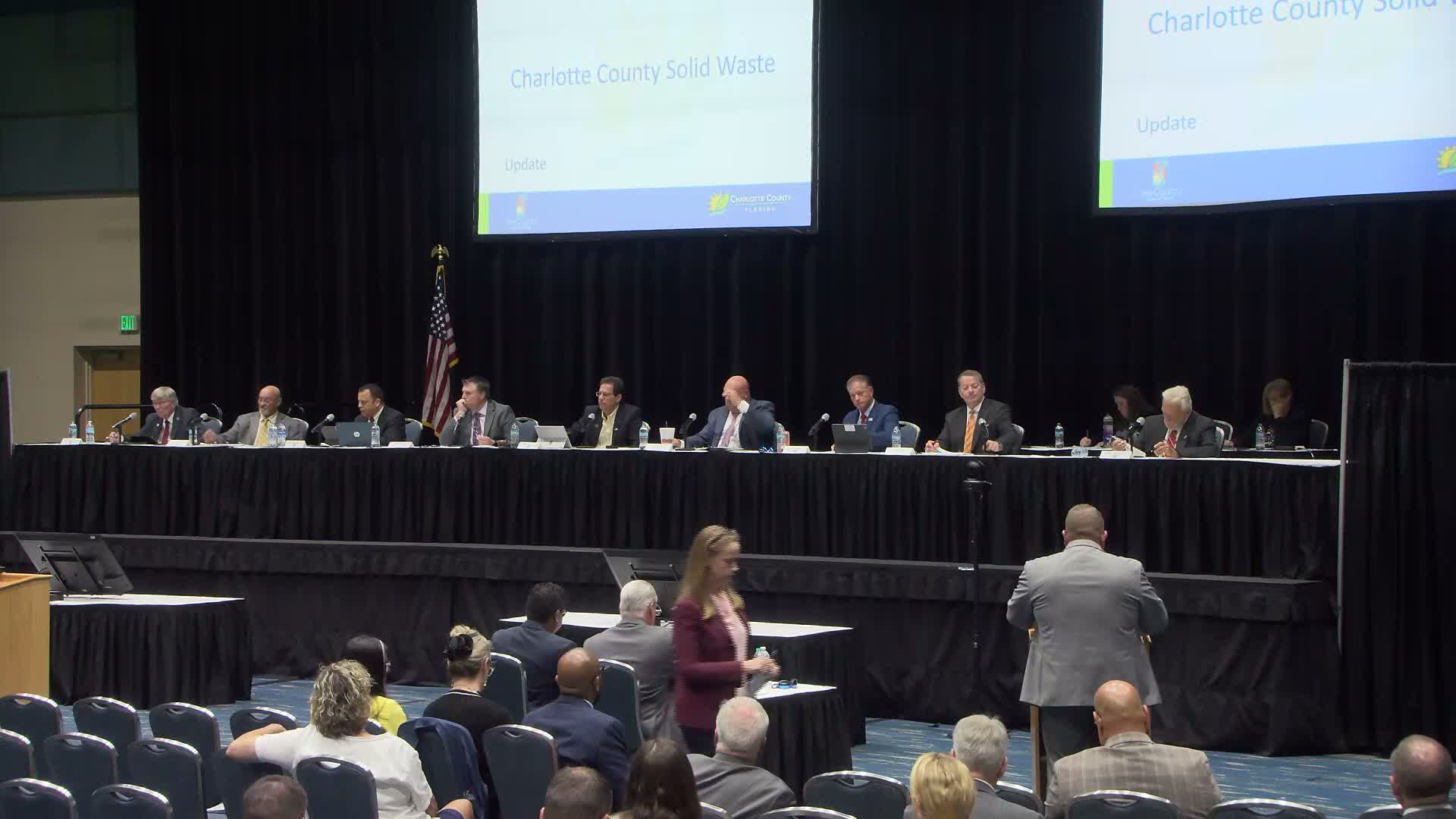
Charlotte and Lee County staff used the joint meeting to describe regional solid‑waste systems, capacity timelines and potential next steps — including landfill vertical expansion, recycling gains and the role of waste‑to‑energy facilities.
John Elias, Charlotte County’s public works director, said the county has approved a vertical expansion study to raise the permitted landfill height from 130 feet to 195 feet. Elias said the selected engineering firm (SCS Engineering) estimated permitting and engineering costs at roughly $97,500 and that the expansion would buy approximately 11 years of capacity past the county’s 2029 horizon.
Lee County’s Rebecca Rodriguez summarized Lee’s integrated solid‑waste system and Buckingham Waste Energy Facility in Fort Myers. Rodriguez said Lee handles roughly 1,000,000 tons of waste per year across curbside recycling, construction and yard‑waste processing and that the county’s waste‑to‑energy facility has been at capacity since about 2020; she said the Lee Hendry landfill site is expected to provide capacity until about 2040.
Commissioners framed the two counties’ timing as similar concerns about running out of landfill space and discussed options that could extend regional capacity, including new waste‑to‑energy plants. Commissioner comments noted long permitting lead times for new facilities (7–10 years), the potential for joint regional facilities to reduce hauling and the tradeoffs between landfill expansion and emissions or ash disposal. One commissioner suggested building additional waste‑to‑energy capacity north of the Caloosahatchee River to reduce bridge hauling and preserve Buckingham’s capacity.
Public commenters raised environmental concerns about incineration and air emissions. Marcia Ellis and other speakers urged careful review of any proposed incinerator near the Zimmel Road landfill, warning against long‑term air and water impacts; another speaker referenced Title V stationary source permitting and dioxin concerns tied to burning plastics.
No formal decisions were made. Staff described several near‑term items that will return to their respective boards for policy choices, including tipping fee reviews, further study of vertical expansion technical designs and discussions about whether to pursue regional waste‑to‑energy feasibility work or keep current landfill strategy.