Get Full Government Meeting Transcripts, Videos, & Alerts Forever!
Get email alerts on the Staffing And Projections topic
No spam. Unsubscribe anytime.
County projects front‑loaded staffing and operating costs; many positions remain vacant
Summary
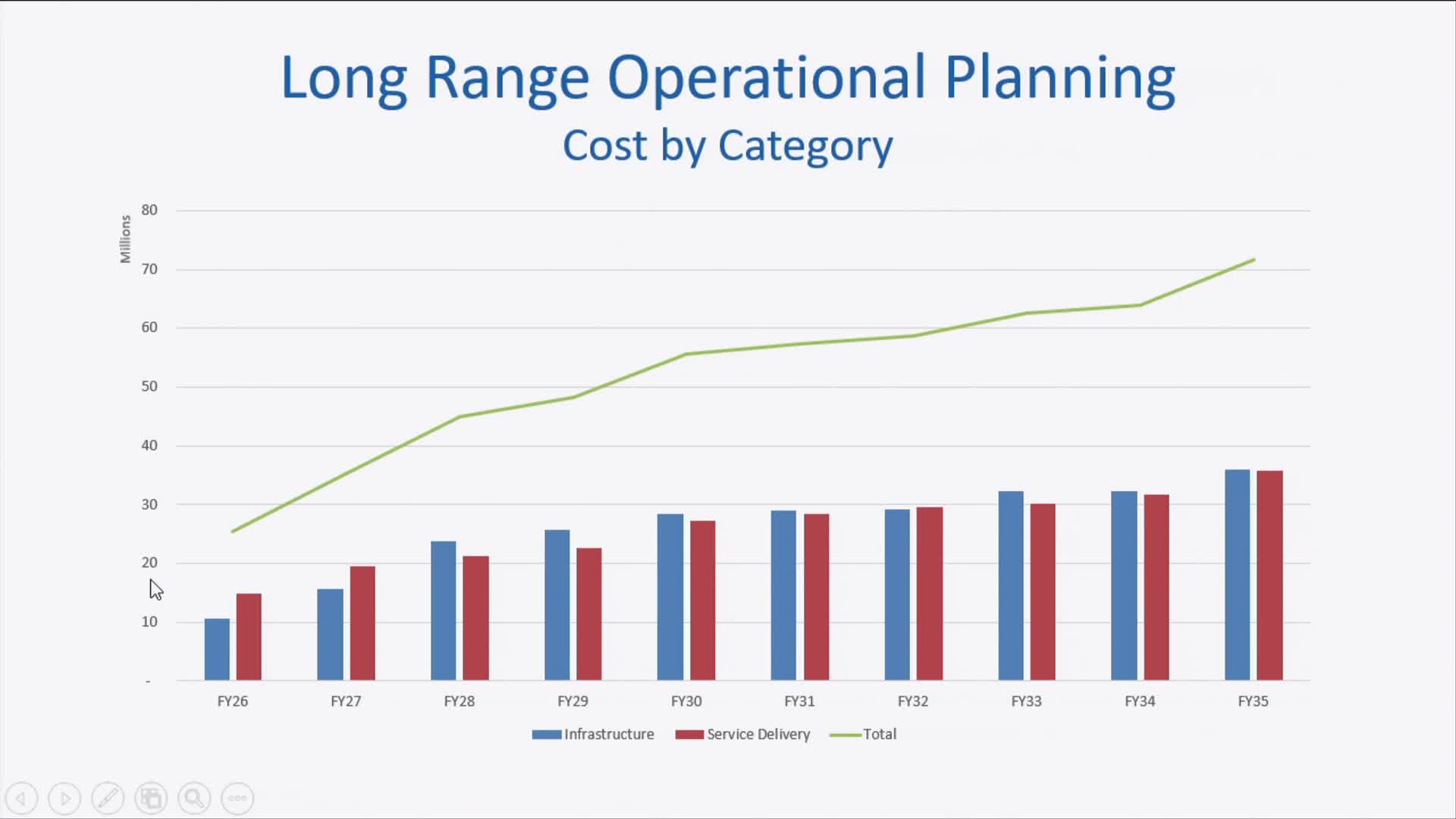
Budget staff presented a 20‑year operational and staffing model that front‑loads many FTE needs into fiscal 2026, estimating up to a $25 million first‑year operating impact if all positions and infrastructure needs were added at once; staff also reported about 20% of positions are vacant or on hold.
Charlotte County budget staff told commissioners on March 6 that long‑range operational planning identifies substantial near‑term staffing and operating costs if projected infrastructure and service‑level needs are fully implemented.
Francine Lisby, assistant budget director, said the county compiled departmental studies (public‑safety call‑time, utility manpower audit, parks master study) into a 20‑year model. The model shows infrastructure and service‑delivery staffing needs concentrated in fiscal year 2026; Lisby said the combined impact in the first year could be about $25,000,000 if all identified positions and operating costs were implemented immediately but that staff do not recommend an immediate, full implementation and will vet the list with administration.
Lisby also said the county has about 20% of authorized positions vacant or on hold for reasons including awaiting equipment, MOUs tied to MSBUs, and facilities offline because of hurricanes. On the fire fund, staff reminded commissioners of the recent rate plan (15% in 2024, 12% in 2025, 6% later) and said union contract changes to 'Kelly days' will require additional FTEs; Chief Jason (identified in the transcript) said approved positions have not yet been recruited and will be phased in as part of implementation.
Staff said the utility‑related positions in 2026 were linked to the East Port expansion and that all such staffing and operating needs will be reviewed further in May utility‑quarterly workshops and in an April vetting session with administration.