Get Full Government Meeting Transcripts, Videos, & Alerts Forever!
Get email alerts on the Affordable Housing topic
No spam. Unsubscribe anytime.
Charlotte County outlines affordable housing progress and funding options as trust fund balance tightens
Summary
County Human Services Director Carrie Walsh reported the Affordable Housing Trust Fund launched with $2.3 million and now has an unencumbered balance of $400,000; staff outlined investments totaling about $11.8 million and floated options to recur funding, including reallocating ARPA or general-fund carryover.
Charlotte County officials on April 17 reviewed progress on local affordable housing efforts and discussed potential recurring funding sources as the county’s affordable housing trust fund balance declines.
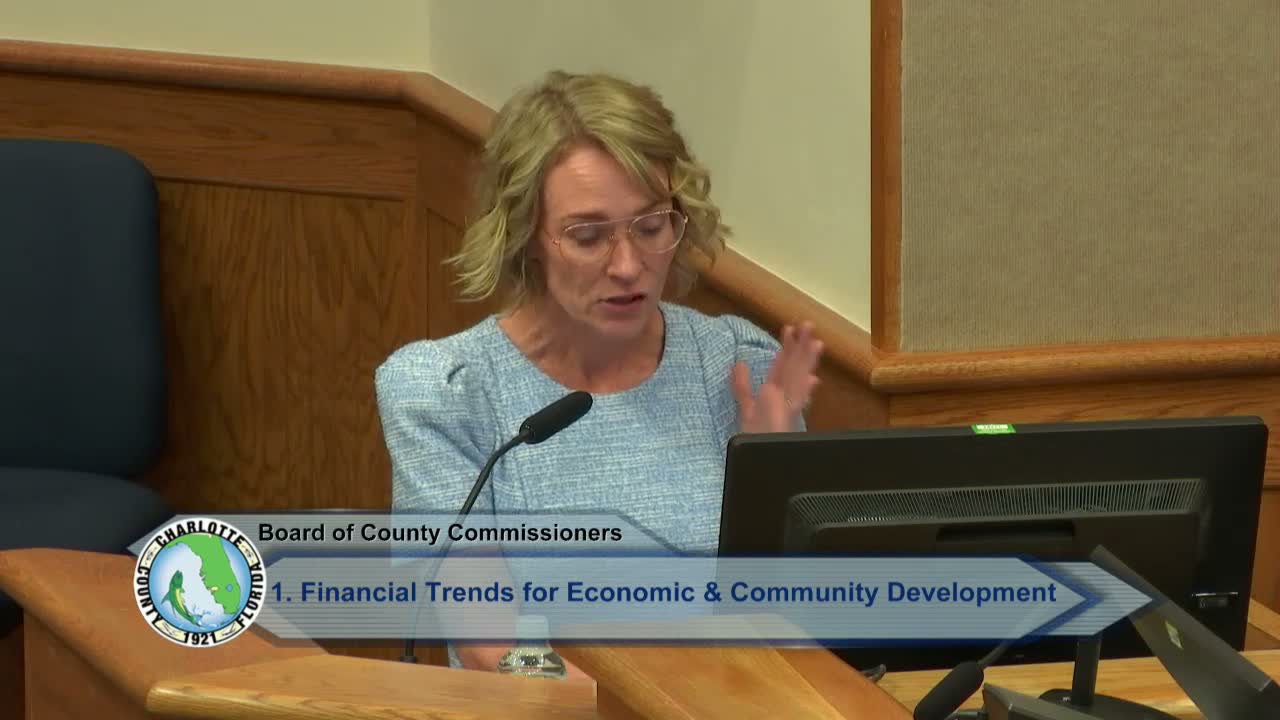
“Charlotte Home … awards density, subsidizes fees and waives impact fees,” Carrie Walsh, human services director, told the Board of County Commissioners during the county’s economic and community development focus-area workshop. She said the trust fund began with an initial balance of $2,300,000 and currently shows an unencumbered balance of $400,000.
Walsh detailed recent investments: roughly $1,400,000 in waived impact fees, $3,700,000 in trust-fund subsidies and $6,700,000 from SHIP and hurricane housing recovery programs — a combined program investment of about $11,800,000. She said the program’s first funded project, Verandas 3, is fully leased and scheduled for a ribbon-cutting on May 22.
Why it matters: commissioners said visible, recurring funding can help attract developers and advance shovel-ready projects. Commissioner Constance asked whether setting aside ARPA or general-fund carryover in the trust fund would signal commitment to developers while noting the county is not obligated to expend money parked there.
Francine Lisby, assistant budget director, said ARPA dollars allocated for affordable housing are currently held in the general fund reserve per the county spending plan and that any board action would be required to move funds into the trust fund. Lisby also noted that new position and project requests are still being vetted ahead of the county’s July tentative budget presentation.
Walsh proposed several steps for commissioners’ consideration: ask the Affordable Housing Advisory Committee for a formal recommendation on recurring trust-fund funding, pursue county-owned land for affordable housing development, consider accepting donated property by resolution, and continue seeking technical assistance and external funding sources (including CDBG once urban qualification is final).
Next steps: staff will bring project- and funding-specific items back to the board for consideration, and commissioners signaled interest in a formal recommendation from the Affordable Housing Advisory Committee before taking recurring-funding action.