
Planning commission approves small distillery and tasting room at 300 W. Front St. with screening, design‑review and hours limits
Get AI-powered insights, summaries, and transcripts
Sign Up Free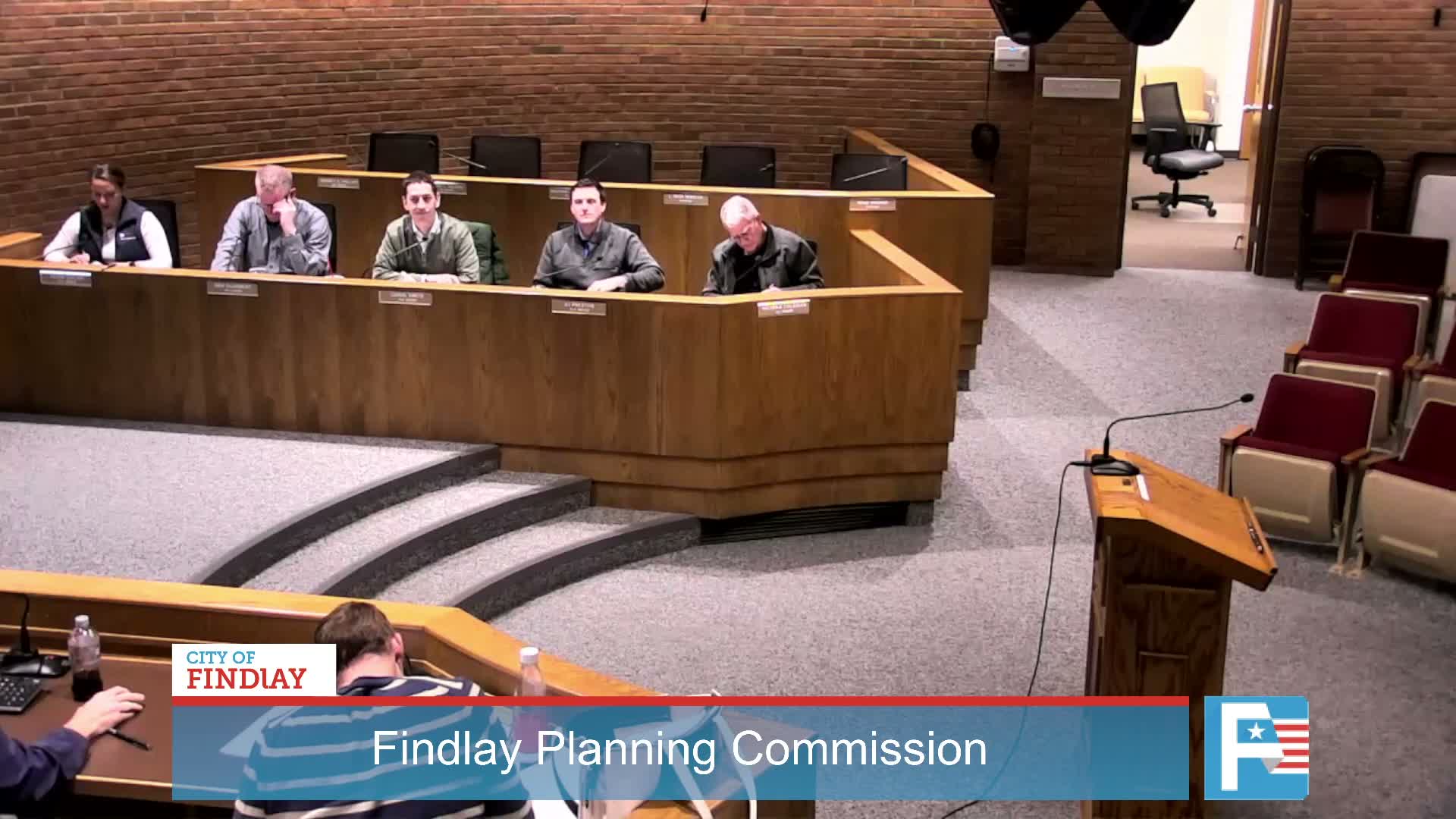
Summary
After extended public comment and debate over odor, noise, parking and ‘whiskey fungus’ concerns, the Findlay City Planning Commission approved CU‑03‑2026 allowing a low‑volume distillery and tasting room at 300 West Front Street, conditioning approval on fencing/landscaping screening, Downtown Design Review Board approval of building aesthetics, a daily 10 p.m. closing time and return to the commission for substantial service expansion.
The Findlay City Planning Commission approved Jan. 8 a conditional use for a low‑volume distillery and tasting room at 300 West Front Street, granting the owners permission to operate subject to screening, design review and operating‑hours limits after more than three hours of presentation and public testimony.
Staff reviewed the project and noted the parcel had been rezoned to C‑3 Downtown Commercial in Dec. 2025. The owners presented a phased plan: phase 1 would convert the rear/addition into a small‑batch distillery with a bottle shop and limited public hours (primarily Friday and Saturday afternoons/evenings and tours by appointment); phase 2 would add a small cocktail lounge later if market conditions allowed.
“Phase 1 is to get that converted up and running along with a tasting room and bottle shop,” applicant Sam Galick said. The applicant and distiller (speaker 20) emphasized low production, federal and state permitting, and closed‑system fermentation and condensation to capture vapors. “You will smell cooked grain,” the distiller said when asked about odor, but he added that much of the process is closed and that distilling would likely occur twice a week.
Neighbors and community leaders voiced a range of concerns at length. Amy Raasch, a resident who said she has lived at 125 Southwest Street for 58 years and cares for an adult son with autism, cited possible ethanol exposure, parking constraints on narrow streets and nighttime noise. Sixth Ward Council member Rodney Phillips urged study of the so‑called whiskey fungus and asked how operations could be capped if a larger facility later sought a permit. Other commenters raised the proximity of multiunit housing, deliveries down a narrow alley, and the nearby City Mission shelter.
Commissioners and staff discussed mitigation measures. Staff recommended, and the motion required, screening/fencing and landscaping along the parking lot on both sides, Downtown Design Review Board approval of the building’s exterior, and that any substantial expansion of services (for example, transitioning to a full commercial kitchen or extended nightly service) must return to the Planning Commission for review. Commissioners also proposed an operating‑hours limit to reduce neighborhood impacts; the motion included a 10 p.m. daily closing time for public hours.
The motion to approve CU‑03‑2026 with those conditions passed by voice vote (recorded as 'Aye' for commissioners present). The commission directed staff to connect the applicants with the Marathon Performing Arts Center about shared or off‑peak parking and noted the Downtown Design Review Board meeting scheduled for Jan. 14 that will consider exterior aesthetics.
What’s next: Applicants must obtain federal and state distilling licenses, secure Design Review Board approval of exterior changes, schedule required fire and safety inspections and satisfy screening and parking coordination conditions before expanded operations. The commission required the applicants to return if they seek substantial expansion of services.