Planning commission backs Diana’s Pumpkin Patch with waivers, sets conditions
Loading...
Summary
The Fremont County Planning Commission recommended approval of SRU25-002 for Diana’s Pumpkin Patch — a permanent agritainment permit for corn mazes and pumpkin picking — granting two waivers, requiring a signed FCDOT roadway materials agreement and several conditions including ADA surfacing before the 2026 season and remediation of code violations.
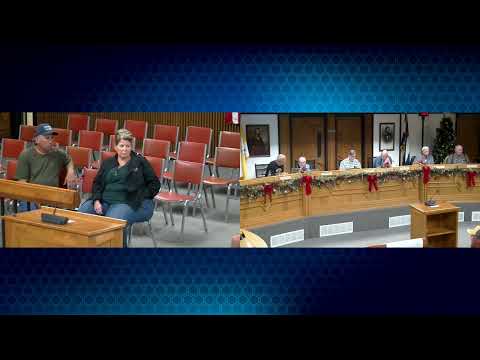
The Fremont County Planning Commission voted to recommend approval of SRU25-002, an agritainment permit for Diana’s Pumpkin Patch in Canyon City, after a lengthy discussion of parking, road impacts and code violations.
Planning staff said the permit would formalize an operation the applicants, Timothy and Susan Madone, have run under temporary permits for years. Director Victoria summarized the proposal as a seasonal agritainment use at 1649 and 1629 Poplar Avenue including a corn maze, pumpkin picking, tractor hay rides, and educational programming. “This permit is for life of use,” Victoria said, describing a one-time special-review permit with yearly inspections.
The staff report listed hours and attendance estimates (weekday guests 65–75; school events up to about 250; weekend attendance estimated at 800–1,000 guests on peak days) and proposed staging of new structures over the next several years. Staff recommended approval with two waivers (hard surfacing for a dumpster pad and surfacing requirements for 103 grass parking spaces in agricultural areas) but opposed waiving the hard-surfacing requirement for the six ADA parking spaces, citing the Fremont County Zoning Resolution (FCZR) surfacing standards.
Agency reviews shaped conditions. Public health accepted chemical toilets for the seasonal event but required permits; engineers approved the drainage plan; and FCDOT worked with the applicant on an agreement that would require the applicant to cover material costs for roadway maintenance when wear occurs while county crews would provide labor. Staff said engineers estimated material needs (approximately 34 tons of 3/4-inch gravel, 28 tons of 1/2-inch gravel and about 1,600 gallons of oil) and recommended the county require a signed roadway maintenance agreement before proceeding.
The applicant, who identified practical limits to long-term commitments, objected to several conditions. “I don’t feel like I should have to fix the road,” the applicant said, arguing she operates only about six weekends a year and worried about long-term liability if she stops running the patch. She also disputed the requirement to hard-surface ADA parking, noting that ADA rules require a firm, stable, slip-resistant surface but do not explicitly mandate asphalt or concrete. Staff responded that the FCZR specifically lists asphalt or concrete for ADA surfacing and the commission must weigh precedent and public-access obligations.
Commissioners sought to balance preserving farmland with traffic and public-safety responsibilities. Staff described a compromise in which the county would allow parking on the property’s road frontage to minimize loss of agricultural land, provided the applicant police on-site parking, prevent parking that blocks approved spaces, remove trash from the right-of-way, and enter the FCDOT materials agreement. Code enforcement also identified setback violations and stored materials along a fence line that staff said should be corrected; the applicant agreed to relocate carports, shipping containers and reorganize equipment.
A motion to approve SRU25-002 as described by staff — granting the two waivers, requiring the signed FCDOT roadway materials agreement (made expressly valid only “for the life of the agritainment business” to address the applicant’s concern), and listing contingencies including relocation of carports and shipping containers, annual chemical-toilet permits, hard surfacing of the six ADA spaces prior to the 2026 season, and remediation of identified code violations prior to the 2026 season — passed on a voice vote.
The planning commission’s recommendation moves SRU25-002 to the Board of County Commissioners for the final decision. Commissioners encouraged the applicants to raise other regulatory concerns directly with the board at that hearing.