
Ellis County holds extended public discussion of proposed 175-MW Tallgrass solar project
Get AI-powered insights, summaries, and transcripts
Subscribe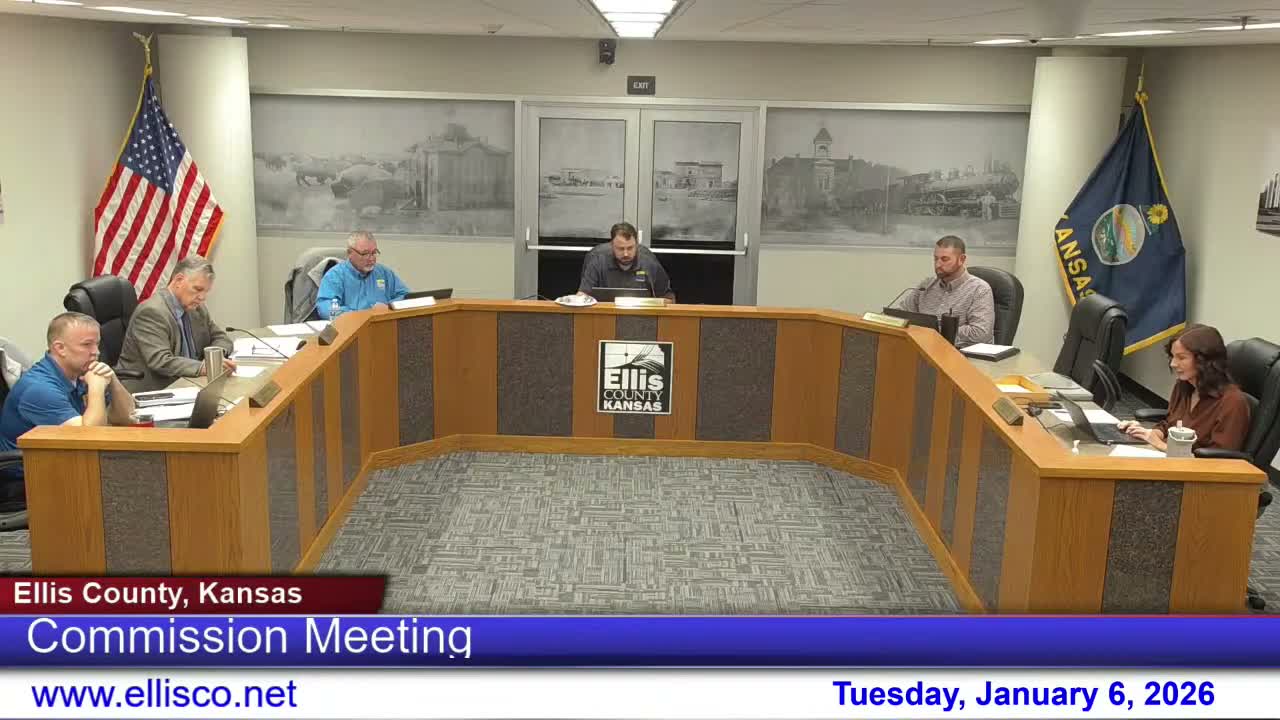
Summary
Developers of a proposed 175-megawatt Tallgrass solar project answered questions on wetlands, decommissioning bonds, interconnection costs and local benefits at a non-voting Ellis County Commission session; county staff and residents pressed for more environmental data, pipeline coordination and negotiated pilot and road-use agreements before any vote.
County commissioners on Jan. 6 held a lengthy, non-voting public discussion of a conditional use permit application from Tallgrass Development LLC (IBV Energy Partners/DB Energy) to build a 175-megawatt commercial solar facility in Ellis County.
Steven Link, with DB Energy, said the project was sited because it has access to a 345-kilovolt transmission line critical for delivering large-scale generation. "We have a very detailed plan," Link said, and announced an IBV open house on Jan. 22 to field resident questions and present technical studies. He said the project has completed interconnection studies with the grid operator and that long-lead equipment and network upgrades make a multi-year construction timeline likely.
Why it matters: commissioners and residents focused on local impacts — wetlands, wildlife, roads, pipelines and county revenues. Commissioners said they will not vote on the CUP until the developer and county reach agreement on a set of conditions, including a decommissioning funding agreement, a road-use agreement, documentation of required federal and state permits, and a negotiated payment-in-lieu-of-taxes (PILOT) arrangement.
IBV said environmental and permitting work is underway. "We have done in-depth analysis," Link said of interconnection and environmental studies, and engineer Pat Ripa said the team found a wetland in the site—oundary and intends to avoid impacts, proposing a 30-foot buffer from the edge of jurisdictional wetlands to the fence line and another 20-foot buffer from fence to panels. The developer said it will submit wetland delineations and Army Corps jurisdictional determinations to county staff for review.
Decommissioning and financial assurances were central questions. Link said the project will place an irrevocable financial assurance instrument (bond or letter of credit) in favor of the county to cover full removal and restoration at the end of operations, and that the required amount would be reviewed every five years to account for inflation. "Those bonds will be in place prior to construction," he said.
Residents sought more transparency and data. Jackie Augustine, executive director of Audubon of Kansas, urged the county to require pre-, during- and post-construction ecological monitoring (prairie chickens, insects, plant diversity) and to make those data public. "This is on native prairie," Augustine said. "We support clean energy, but we think it should go on already-developed lands when possible." IBV replied that it will share studies with the county and engage state wildlife agencies.
Pipeline safety and rights-of-way were raised by Kurt Von Boulkeren of CHS, which operates a crude pipeline in the region. He asked to be notified early and to coordinate on any work near pipeline easements; IBV said it is conducting ALTA-level title and survey work and will coordinate with pipeline operators as part of its due diligence.
County process and next steps: planning staff and county counsel outlined the procedural path: the planning commission had recommended approval with conditions and asked for continued negotiations; the county will not place the CUP on a commission agenda for a final decision until the required permits and negotiated agreements (PILOT, road use, decommissioning and emergency-response plans) are in place. County counsel also noted that a protest petition had been filed and, if it meets the statutory threshold, would require a unanimous (3-0) commission vote to approve the CUP.
What to expect: IBV said the project footprint would be fenced and seeded with native mixes, that panels would be monitored and stowed for extreme weather, and that insurance and bond instruments would be in place. Commissioners signaled they will pursue negotiated agreements (including whether to hire outside counsel for PILOT negotiations), continue public engagement, and review detailed ALTA surveys and environmental reports before any vote.
The commission took no vote on the CUP at the Jan. 6 meeting; IBV will hold the Jan. 22 open house and commissioners expect to see negotiated agreements and additional technical files at future meetings before any formal action.