Get Full Government Meeting Transcripts, Videos, & Alerts Forever!
Get email alerts on the Contract Dispute topic
No spam. Unsubscribe anytime.
Contractors and customers describe unpaid LED‑sign work; judge permits pattern evidence in Stockton case
Summary
Multiple witnesses testified that Starline Signs (operated by Nathan Stockton) took large deposits for LED signage for towns and churches, but customers say ThinkSign never received payment and the completed signs were not delivered; judge allowed evidence of prior similar transactions for the upcoming trial.
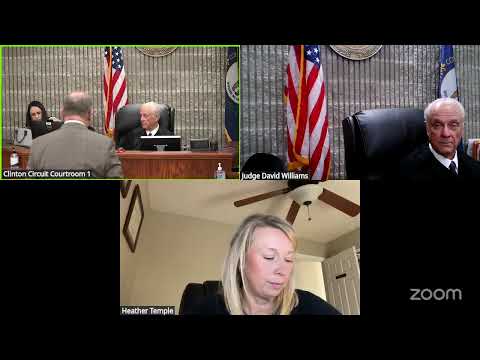
Witnesses in Clinton County court on Thursday described a pattern of deposit payments and unfulfilled signage work by a company operating as Starline Signs, evidence the court said it would permit at trial as probative of a recurring pattern.
Franklin Heatherly, a former Monticello fire chief, testified the town awarded a FEMA‑funded bid for an LED sign to Starline after receiving a single bid of roughly $29,977.26; the town then paid what Heatherly described as a large down payment (approximately $26,000), but the town never received the manufactured sign. Heatherly said ThinkSign, the Louisville manufacturer listed on the bid, told him it never received the down payment and never began production.
Tina Russell of Signarama testified she subcontracted fabrication and installation work to Nathan Stockton from 2022 through mid‑2025, paid a 50% deposit and later the balance for a church cabinet (total about $10,080 plus $780 for powder coating), and never received the completed cabinet or reliable photographic proof of completion. Russell said she recovered the customer‑purchased letters but not a completed cabinet.
The Commonwealth (in a related criminal or consumer enforcement posture) moved to admit testimony about prior transactions as evidence of a common plan or intent; the judge ruled that the proffered testimony was admissible under the court's framework for similar‑acts evidence and allowed the witnesses to be called. Defense counsel preserved objections.
What it means: The judge’s ruling permits the prosecution or plaintiff to present testimony about a pattern of deposit taking and alleged non‑delivery; that evidence can be offered to prove intent, absence of mistake, or a common scheme at trial. The financial claims and missing deliveries are likely to be central issues in the trial or in civil restitution proceedings.
The principal privately contracted parties named on the record were Starline Signs (operated by Nathan Stockton) and ThinkSign (manufacturer, Louisville); several municipal and private customers testified about down payments, promised refunds that were not paid and unsuccessful attempts to recover funds.