Get Full Government Meeting Transcripts, Videos, & Alerts Forever!
Get email alerts on the Field Allocation topic
No spam. Unsubscribe anytime.
Mill Valley commission approves 2026 field-allocation plan after tense debate between soccer and lacrosse representatives
Summary
The Parks & Recreation Commission approved staff'recommended field allocations for 2026, endorsing sport-of-season priorities but leaving soccer and lacrosse leaders split over several Bayfront and Hockey South time slots.
The Mill Valley Parks and Recreation Commission voted to approve staff'recommended field allocations for 2026 after an extended discussion and public comment from local sports groups.
Jay Ingram, deputy director of arts and recreation, told the commission the scheduling effort was an "incredibly complex game of Tetris," noting staff received requests from eight organizations and leaned on the city's sport-of-season policy to resolve conflicts. He described adjustments that give lacrosse extra time during its spring sport-of-season while shifting some soccer hours into the fall when soccer is the sport of season.
The decision drew sharply different responses at the meeting. Mary Beth Todd, who serves on the board of Southern Marin Lacrosse Club, said lacrosse is "growing rapidly" and remains capacity constrained in spring; she urged the commission to preserve the spring access lacrosse relies on. "That extra half hour is essential for accommodating more teams and keeping practices local," Todd said, asking the commission to adopt staff's recommendation.
Representatives of Mill Valley Soccer expressed frustration with reductions to several weekday and Sunday practice blocks. Nick Bach, speaking for the Mill Valley Soccer Club board, warned that shortening typical hour-and-a-half sessions to one hour would make programming more difficult and urged staff and commissioners to seek alternatives where feasible. Rick Fullerton, a commenter who urged more outreach, described the schedule as "rushed" and asked for additional fact gathering and dialogue among leagues.
Commissioners questioned whether short, one-hour training blocks are sufficient and discussed whether historical practice patterns should control future allocations. Staff and several commissioners emphasized the need to balance support for growing sports with preserving historic use: commissioner Naomi Grama noted the Tetris-like constraints and expressed support for staff'recommended allocations.
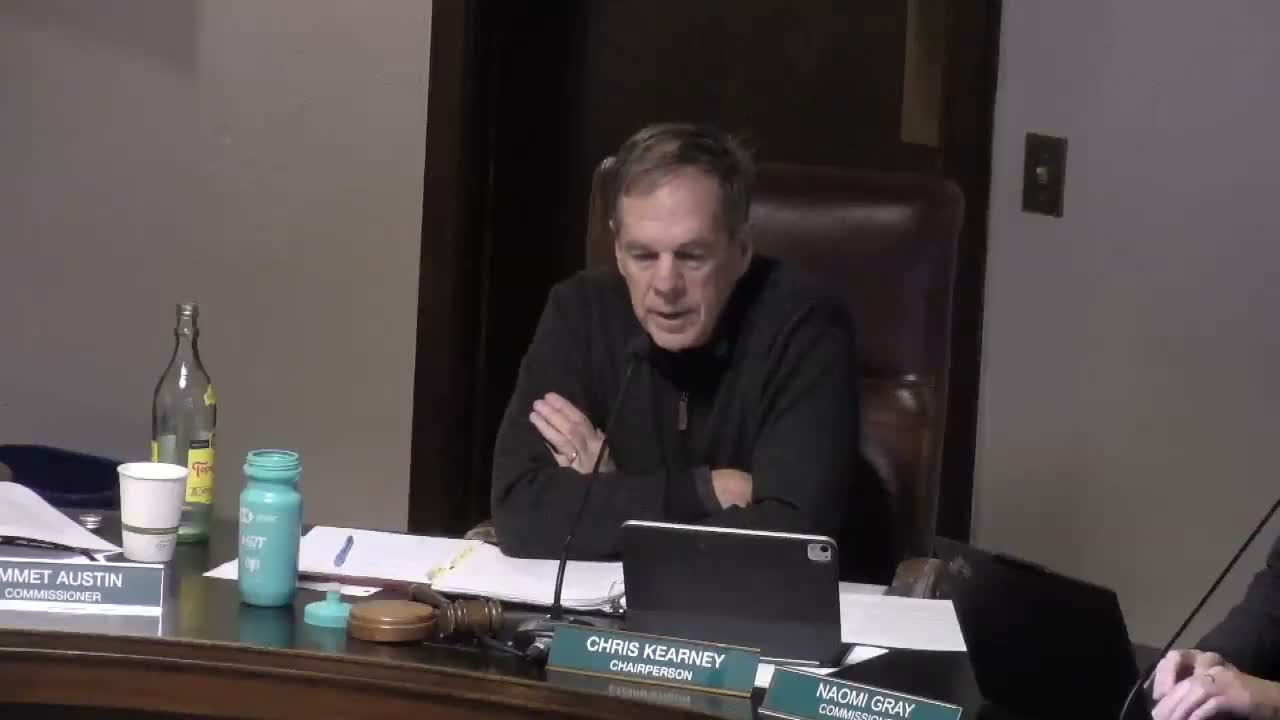
After discussion, Grama moved to approve the draft allocation plan and Commissioner Tory Runzl seconded. Chair Chris Carney called the voice vote and announced the motion carries; no opposed votes were recorded in the transcript.
Next steps: staff will work through remaining logistical details with leagues and return related calendar items (including any required April meeting-date adjustments) to the commission as needed. The commission also noted that split-field proposals and any agenda items not publicly noticed would be discussed at a future, properly agendized meeting.