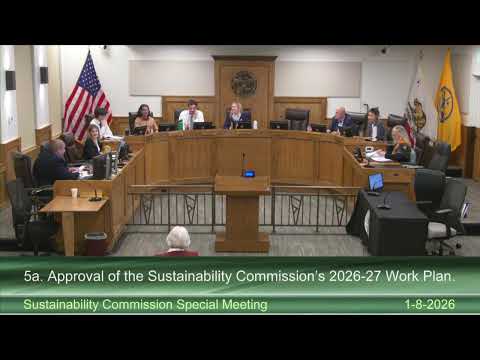
Glendale Sustainability Commission adopts 2026–27 work plan and adds review of AB 1572 compliance
Loading...
Summary
The commission voted to approve the 2026–27 sustainability work plan with an amendment to review compliance with AB 1572 (the state nonfunctional turf irrigation regulation). Staff summarized AB 1572's phased dates (2027–2029) and listed exemptions to be checked for local impact.
The Glendale Sustainability Commission approved its 2026–27 work plan at a special meeting on Jan. 8, 2026, adding a directive to review compliance with Assembly Bill 1572, the state regulation that phases out the use of potable water for nonfunctional turf.
Staff presented the proposed work plan and described three modifications carried forward from prior discussion: adding a demand‑response item, considering Zone 0 regulations within fire setbacks, and reviewing AB 1572 requirements. In an overview staff summarized the bill’s phase‑in schedule and exemptions: "it bans the use of drinking water, potable water for nonfunctional turf... phasing in requirements starting on 01/01/2027 for state and local properties, then in 2028 for the commercial, industrial, and institutional zones and 2029 for HOAs," and noted exemptions for functional turf, parks, cemeteries, golf courses, sports fields, tree/shrub needs and certain non‑turf plants.
Commissioners raised compliance questions, asking what options property owners and HOAs would have and whether schools would be covered under the 2027 timeline; staff said the commission should review the bill’s specific language to confirm which institutions are exempted and how local implementation will work. Staff recommended preparing a fact sheet and using local channels (GTV‑6, city web pages) to communicate requirements and compliance pathways.
A commissioner moved to approve the work plan with the amendment to review AB 1572 compliance and another commissioner seconded. The clerk conducted a roll‑call vote and the motion passed. The commission did not identify in the record an individual who opposed the motion; staff will follow up with language clarifications and draft outreach materials for how the new state requirements could apply to Glendale properties.
Next steps recorded in the meeting include staff review of AB 1572 statutory language to determine exact exemptions and outreach planning to notify affected property owners and institutional stakeholders before the bill’s phase‑in dates.