Get Full Government Meeting Transcripts, Videos, & Alerts Forever!
NASA presenter tells Glendale commission how OCO‑2 and OCO‑3 map CO2 and where cities can use the data
Summary
At the Jan. 8 meeting, a Jet Propulsion Laboratory researcher described NASA’s OCO‑2 and OCO‑3 satellite missions, saying their data (2 km x 2 km points; <1 ppm error) can be downscaled and combined with other imagery to help Glendale track emissions and map urban greenery.
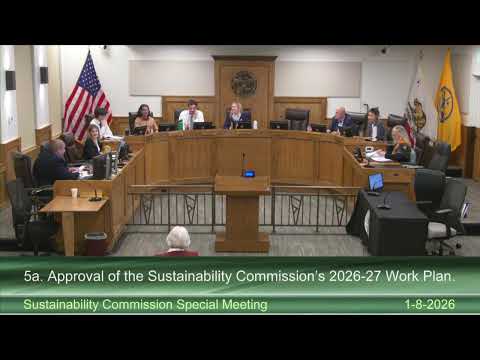
At a Jan. 8 special meeting of the Glendale Sustainability Commission, a Jet Propulsion Laboratory researcher, identified in the transcript as Dr. Chatterjee, described how NASA’s Orbiting Carbon Observatory missions (OCO‑2 and OCO‑3) measure atmospheric carbon dioxide and how the data can be applied to city-scale planning.
Dr. Chatterjee told the commission that OCO‑2, launched in July 2014, provides pole‑to‑pole coverage and an 11‑plus year data record. OCO‑3 — an instrument mounted on the International Space Station — uses a snapshot area mapping (SAM) mode that can “zoom in” on a target such as the Los Angeles Basin and collect high‑density observations. “OCO‑2 and OCO‑3 data now have errors less than 1 part per million,”…
Already have an account? Log in
Subscribe to keep reading
Unlock the rest of this article — and every article on Citizen Portal.
- Unlimited articles
- AI-powered breakdowns of topics, speakers, decisions, and budgets
- Instant alerts when your location has a new meeting
- Follow topics and more locations
- 1,000 AI Insights / month, plus AI Chat