Get Full Government Meeting Transcripts, Videos, & Alerts Forever!
Get email alerts on the Charter Schools topic
No spam. Unsubscribe anytime.
State charter authorizer reports growing demand, agrees executive-director compromise with superintendent
Summary
The Wyoming Charter School Authorizing Board told legislators it expects an application surge after March and has reached a temporary agreement with the State Superintendent: the executive director will remain within the Department of Education at current salary/benefits and be re-evaluated on attrition; the board flagged facility lease oversight, special education support and central-office funding as priorities.
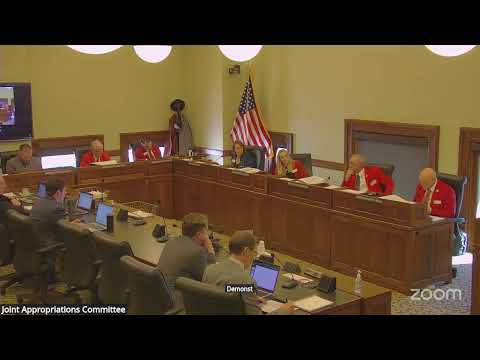
Janine Batevski, chair of the Wyoming Charter School Authorizing Board, and executive director John Waller told the Joint Appropriations Committee they need clarity and staffing stability to manage an expected influx of charter applications.
The board said it negotiated a compromise with the State Superintendent after concerns about ‘growing government’ and lack of a stand-alone executive director: the current executive director will remain at the Department of Education at his present salary and benefits, and the arrangement will be revisited upon attrition. The board said the position provides critical guidance and hands-on support for start-up schools on fiscal management, grants, and compliance, including special-education issues.
Board members reported roughly 650–750 students enrolled in three state-authorized schools to date, with plans for further growth as new schools open and existing charters add grades. The board emphasized that a March application window could accelerate growth quickly but said it cannot predict the scale.
Lawmakers raised facility-lease oversight as a concern after the board described five-year contracts and some leases negotiated with LLCs; the board said the state facilities office is engaged and that contract renewal reviews in year five will address rent, LLC arrangements and other transparency questions. Members also discussed potential statutory cleanup of application timelines and central-office funding models to align administrative responsibilities and resources.
The board said it is not seeking new funding in this hearing but asked for time and statutory clarifications to accommodate growth and to protect students and taxpayers as the program expands.