Get Full Government Meeting Transcripts, Videos, & Alerts Forever!
Get email alerts on the Housing Policy topic
No spam. Unsubscribe anytime.
Commission recommends City Council adopt SB 9 urban lot split ordinance with clarifications on ministerial review
Summary
The commission unanimously recommended that the City Council adopt an ordinance implementing SB 9 urban lot splits locally, adding objective standards for utilities, vegetation management and fire-mitigation access and clarifying ministerial appeal language.
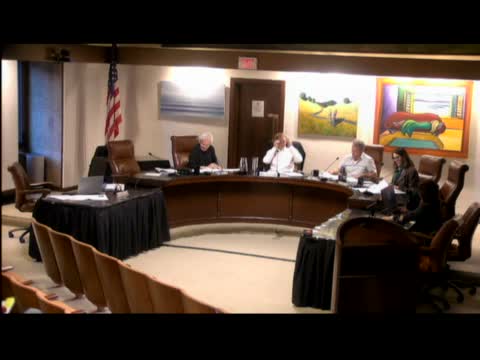
The Mill Valley Planning Commission voted unanimously to recommend that City Council adopt a local ordinance implementing the State of California’s SB 9 provisions on urban lot splits, adding objective standards and clarifying ministerial-review and appeal procedures.
Staff explained that the draft ordinance implements the second half of SB 9 (urban lot splits), allowing a one-time ministerial subdivision of a qualifying single-family parcel into two lots (roughly a 60/40 split) where each resulting lot is at least 1,200 square feet. The ordinance lists objective standards that applicants must meet, such as separate utilities and sewer connections, emergency access, vegetation-management measures informed by the local fire department, and a requirement that ministerial actions be completed within 60 days after a complete application. Several parcel and site types are excluded, including parcels in certain sensitive habitats, floodways, and sites that would demolish existing affordable housing.
Commissioners probed how changing state fire-severity maps would affect eligibility (staff said very-high-fire-severity zones are shrinking under new maps, increasing eligibility for some parcels) and sought examples of fire-mitigation measures (hydrant proximity, access standards, vegetation-management plans). Staff encouraged preliminary research applications to help applicants determine eligibility before expensive surveys or engineering work.
A local designer in the public commented that the city should publish a concise guidance one-pager to help applicants navigate the evolving state law and local code; he offered volunteer help drafting such materials. Commissioners and staff agreed a short guidance handout would be useful for homeowners and design professionals given continuing state changes.
Commissioner Scouse moved to approve a resolution recommending council adopt the ordinance with staff-recommended text (including amendments clarifying ministerial appeals); Commissioner Kasparick seconded. The motion passed unanimously. Staff will forward the ordinance to City Council for first reading, then a second reading and adoption with an effective date 30 days after council adoption, consistent with the norms for ordinance adoption.
The commission emphasized that ministerial SB 9 reviews do not replace existing discretionary subdivision processes for applicants who need exceptions or cannot meet objective standards; discretionary options remain available through the subdivision ordinance.