Get Full Government Meeting Transcripts, Videos, & Alerts Forever!
Get email alerts on the Fee Waiver Policy topic
No spam. Unsubscribe anytime.
Mill Valley adopts partnership and fee-waiver policy to standardize facility discounts
Summary
Council adopted a pilot partnership and fee-waiver policy establishing Group 1 and Group 2 eligibility tiers, a $100,000 pilot-year cap on waivers, and application procedures; the policy includes an expanded local definition to add two voting precincts that cover Marin City.
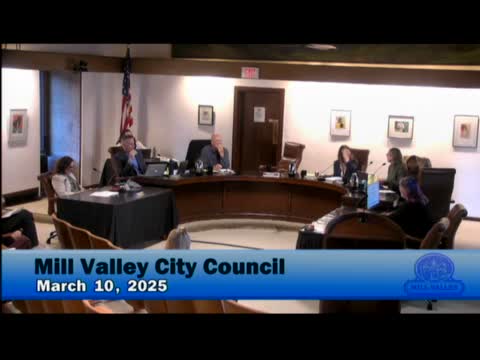
The Mill Valley City Council voted March 10 to adopt a new Partnership and Fee Waiver Policy for Arts and Recreation facilities, creating a formal process for fee reductions and waivers and setting pilot-year financial and procedural limits.
Recreation Supervisor Christie Heebacher told the council staff had identified 43 user groups that received waivers in 2023–24 and that waivers ranged from about $200 to $11,000 per group. Under the adopted policy, staff may approve waivers up to $2,000; requests above that threshold will go to the Parks & Recreation Commission. Organizations may receive up to $10,000 in waivers within a 12-month period and the policy includes a $100,000 per fiscal-year benchmark; if requests exceed that amount, subsequent approvals will go to the commission for review.
Heebacher said Group 1 priority status is for qualifying local nonprofits, public schools with at least 75% residency in the 94941 ZIP code and specified voting precincts, social-service groups and long-standing city partners. Group 2 includes commercial, bridal and corporate requests. Councilmember amendments added voting precincts 31228 and 31229 (Marin City) to Group 1 eligibility.
Council members asked whether the application could be moved online and how staff would track the pilot-year expenditures. Heebacher said the application will be a fillable PDF and staff will track use groups during the pilot; staff plans to bring regular reports to the Parks & Recreation Commission and will return to council for policy changes if necessary.
Council approved the policy by voice vote with the amendment to include the specified voting precincts; staff described the approach as a pilot designed to promote equitable, fiscally responsible partnerships while preserving flexibility for community needs.