Milton council denies setback-flexibility amendment after heated public comment
Loading...
Summary
After more than an hour of public testimony and debate, the Milton City Council voted 5–2 to deny a proposed text amendment (RZ25330) that would have allowed reduced front setbacks and larger rear setbacks in small "qualified" subdivisions, citing concerns about fairness, data and enforcement.
The Milton City Council voted 5–2 on Jan. 5 to deny a proposed amendment to the city's Unified Development Code that would have allowed reduced front setbacks and expanded rear setbacks for certain small subdivisions.
Diana Wheeler, interim community development director, told the council the change (RZ25330) was intended to "accommodate better building placement, preserve more trees, and natural areas without increasing density," and outlined three options staff had developed and discussed with the planning commission. Those options ranged from a modest front-yard reduction with a 60-foot rear setback to a more aggressive 40-foot front / 70-foot rear plan; the planning commission recommended a compromise: a 45-foot front setback and 65-foot rear setback with a 25-foot tree-preservation area.
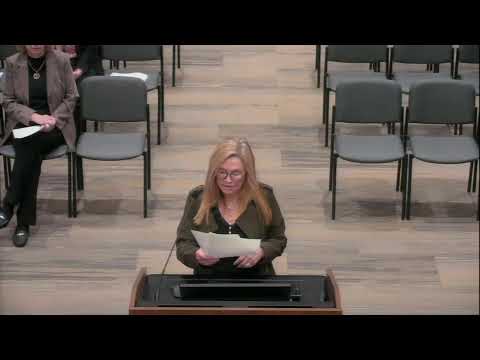
Several residents urged the council to adopt the stricter option. "We believe the city should adopt option B of the proposed tax amendment to the zoning ordinance RZ25-eight," said Lisa Bumiller of Taylor Glen, asking for a larger undisturbed buffer to protect privacy and existing trees. Tom and Kim Gauger, also from Taylor Glen, warned that "building 8,000-9,000 square-foot homes on 1-acre lots seems impossible, perhaps impractical, and maybe even irresponsible," and said the larger rear buffer would better protect neighbors.
Others urged caution. Mark San Fratello, who said he had provided city staff data on variance requests, said, "Over roughly a 3‑year period, there's been an average of just under 2 and a half variance requests per month," arguing the numbers do not show a code enforcement crisis and asking for carve-outs for developments already substantially under way. Mary Kronk urged the council not to change setbacks for 1‑acre AG1 lots, saying the amendment "does not align with the city's vision for rural Milton."
Council members spent extensive time questioning staff about the difference between an "undisturbed buffer" and a "tree preservation area," enforcement options and whether other code tools (impervious-surface limits, floor-area-ratio rules or tree ordinances) should be considered. Several members said they wanted more data and a holistic review of AG1 rules rather than a targeted change.
Council member Doug Haney moved to deny the amendment; the motion was seconded and the council voted to deny RZ25330 5–2. The council did not adopt changes that night; staff was directed to further study tools and potential code changes.
The denial leaves existing setback standards in place while staff and council consider whether a broader review of AG1 zoning, impervious-surface limits and tree protections is warranted.