Volunteer monitoring links rain events to bacteria spikes; DNA tests so far show no clear human source
Loading...
Summary
Heal Our Harbor and partner volunteers reported 18 months of canal monitoring that found enterococci spikes after heavy rain. Preliminary DNA analyses did not indicate human sewage, but researchers said the study is ongoing and recommended expanded monitoring and coordination with FDEP to refine source tracking.
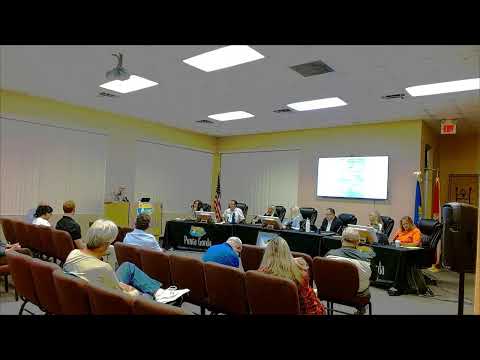
At a Jan. 6 workshop, volunteers and scientists with Heal Our Harbor presented 18 months of citizen-run water-quality monitoring across the Punta Gorda canal system and reported a consistent correlation: rainfall events often precede measurable increases in enterococci, an indicator bacteria used in Florida water-quality assessments.
Karen McKay, the volunteer coordinator and project manager for the Citizens Partnership for Clean Canals, described the program funded by three Rotary Club grants and a Charlotte County Marine Advisory Committee grant that began in April 2024 and expanded from four sampling sites to 10. She said trained volunteers sampled monthly, measured parameters including salinity, pH and dissolved oxygen, and documented conditions with photos.
McKay said the monitoring results show that when rainfall exceeded roughly 1 to 1.5 inches, sites recorded spikes in enterococci and sometimes crossed the Florida DEP’s marine impairment threshold of 130 (the beach/swimming benchmark is lower, about 70). She said dissolved oxygen reached very low levels in late summer months, creating stressful conditions for aquatic life.
The group sent subsets of samples to the University of Miami for DNA-based source tracking intended to distinguish human from animal fecal sources. McKay told council that preliminary DNA results ‘‘did not indicate human sources’’ at the time the presentation was compiled, but she emphasized the study is not complete and that additional DNA testing and analysis remain to be finished.
Richard Whitman, an experienced water scientist invited to comment, told council the evidence points to widespread, rainfall-driven runoff (nonpoint sources) rather than isolated sewer spills. He urged the city to pair flood-control planning with water-quality protections—retention or settling ponds, wetlands and mangroves—warning that moving stormwater into canals without treatment could worsen contamination.
Council members and staff discussed next steps: expanding monitoring with Charlotte County, conveying findings to FDEP and the public, finishing DNA source-tracking, and exploring whether the city should operationalize monitoring (staff-run or budgeted) to provide sustained data for regulatory conversations.
McKay summed up the local finding plainly: "when it rains, we get poop in the water," a phrasing she used to emphasize the runoff linkage to elevated indicators and the need for stormwater solutions. The presenters asked the council to support continued monitoring and collaboration with county and state partners.