
Nevada Health Authority outlines priorities after SB494 reorganization
Get AI-powered insights, summaries, and transcripts
Sign Up Free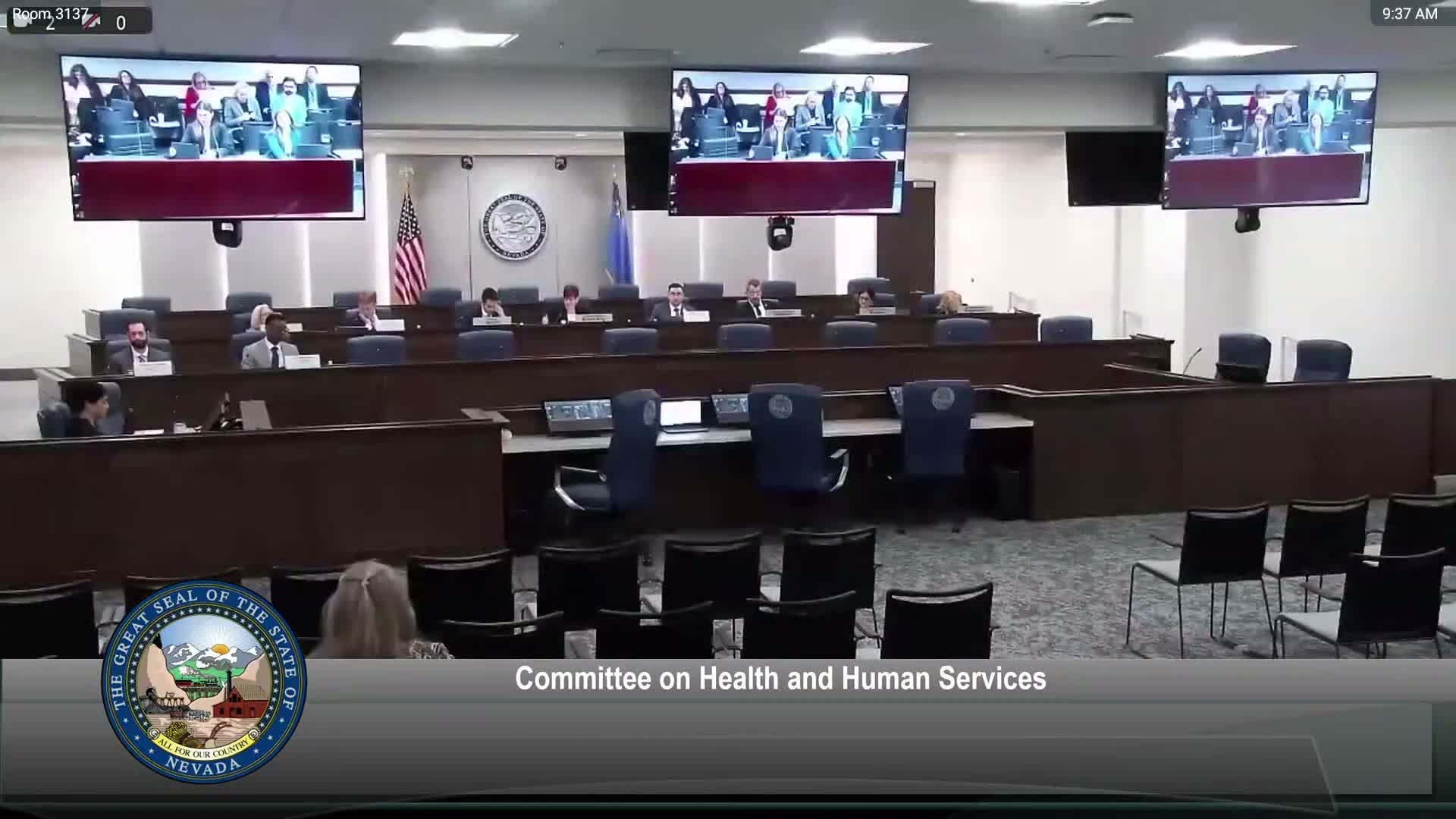
Summary
At a Jan. 6 interim meeting, Nevada Health Authority Director Stacy Weeks told the Joint Interim Committee on Health and Human Services the newly stood-up agency now manages Medicaid, the public option and other programs covering almost 1 million Nevadans and overseeing about $13 billion in state and federal health spending. Weeks outlined four strategic priorities: health improvement, program viability, workforce capacity and value-driven purchasing.
Stacy Weeks, director of the Nevada Health Authority, told the Legislature’s interim Health and Human Services committee that the agency has fully transitioned into its new structure after the 2025 reorganization and an early cyberattack that complicated start-up work. "We have fully transitioned, into our new department," Weeks said, and noted that the combined programs now cover "nearly 1,000,000 lives" and spend "over $13,000,000,000 state and federal on health care."
Weeks walked members through the NVHA mission and a compact set of strategic priorities: improving health outcomes (chronic disease, maternal health, behavioral health), ensuring program viability and fiscal discipline, expanding workforce capacity and pursuing value and innovation in purchasing across programs. The director said the agency is building a senior clinical team and a new analytic office to leverage an all‑payers claims database and university partnerships. "We have a pretty large footprint, and I would argue a lot of buying power in the health care system," Weeks told lawmakers.
She described organizational changes carried out under SB494: Medicaid, the public exchange, the public option (Battle Born State Plans), and public-employee benefits were brought together under NVHA while the Department of Human Services retains direct-service divisions such as child welfare and aging. Weeks said certain program elements — for example, facility licensure and Medicaid oversight functions — moved from other divisions into NVHA to centralize purchasing, compliance and quality work.
The director emphasized the importance of quality and reliability, saying Nevada can increase insurance coverage but must also make coverage usable: "We can make health care coverage affordable all day. We can get everyone could have insurance, but if they can't get in to see a doctor when they need it, then what's the point?"
Weeks told the committee NVHA is implementing dozens of bills from the 2025 session and will continue stakeholder workshops every six months to track progress; she also directed members to her senior staff (including Lisonbee Jenko Hercic) as primary legislative contacts for the interim.
The presentation drew questions about capacity and timelines: members pressed NVHA on readiness of programs migrated into the new structure, website modernization, and how the agency will manage a large implementation portfolio while seeking federal approvals for several Medicaid changes. Weeks said many items require CMS approvals and acknowledged delays, but she described pragmatic next steps including vendor procurements, RFPs and modular rollouts for large IT projects.
Going forward NVHA asked the committee to prioritize technical assistance and stakeholder engagement so the agency can meet statutory deliverables and accelerate pilots that are federally funded.