Get Full Government Meeting Transcripts, Videos, & Alerts Forever!
Get email alerts on the Seagrass topic
No spam. Unsubscribe anytime.
City workshop hears seagrass briefing; presenters urge education, careful dock design and targeted restoration
Summary
Blue Arc Engineering told Punta Gorda City Council that seagrass—shoalgrass, manatee (manti) grass and turtle grass—supports fisheries and tourism but faces threats from anchoring, turbidity and storm damage. The presenter recommended education, signage, design tweaks and agency consultation for restoration.
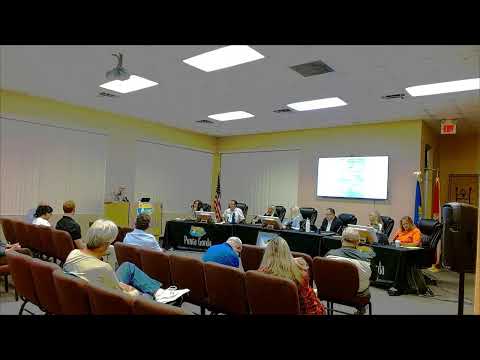
Jack Archambault, a consultant with Blue Arc Engineering, told the Punta Gorda City Council workshop on Jan. 6 that seagrass beds in the Charlotte Harbor Aquatic Preserve are essential habitat and a key local economic resource and that protecting them requires better public education and design choices.
Archambault opened by defining the three dominant seagrass types in Southwest Florida—shoalgrass, manti (manatee) grass and turtle grass—and described their typical depth ranges and ecological roles. He said shoalgrass dominates very shallow water, manti grass inhabits mid-depths and turtle grass extends deeper and as long blades can reach nearly two feet. He noted that seagrass produces oxygen and serves as food and habitat for fish and manatees, supporting recreational fishing and tourism in the region.
The presentation flagged the main local threats: anchoring and prop-scarring in shallow channels, turbidity and shading from sediment or construction, and storm damage from events such as Hurricane Ian. Archambault pointed to images of storm debris and scarring and said hurricane impacts remain visible in many beds.
As remedies, Archambault emphasized education and signage for boaters, design measures for docks and revetments that increase sunlight penetration, and agency consultation to ensure permit compliance. He said planting and restoration work is possible but typically requires funding, specialized contractors and coordination with state agencies including the Department of Environmental Protection (DEP).
Council members asked whether seagrass planting and manatee-viewing sites could be developed locally; Archambault said such projects are feasible with the right funding and permitting, and that the DEP generally supports restoration efforts but that detailed planning and scientific consultation are necessary.
Archambault closed by encouraging a low-cost, education-first approach—clear mooring and signage, better outreach to boaters and property owners—to reduce accidental damage and support longer-term restoration efforts.