
Auditors give district a clean audit but board hears $6.7 million operating gap
Get AI-powered insights, summaries, and transcripts
Sign Up Free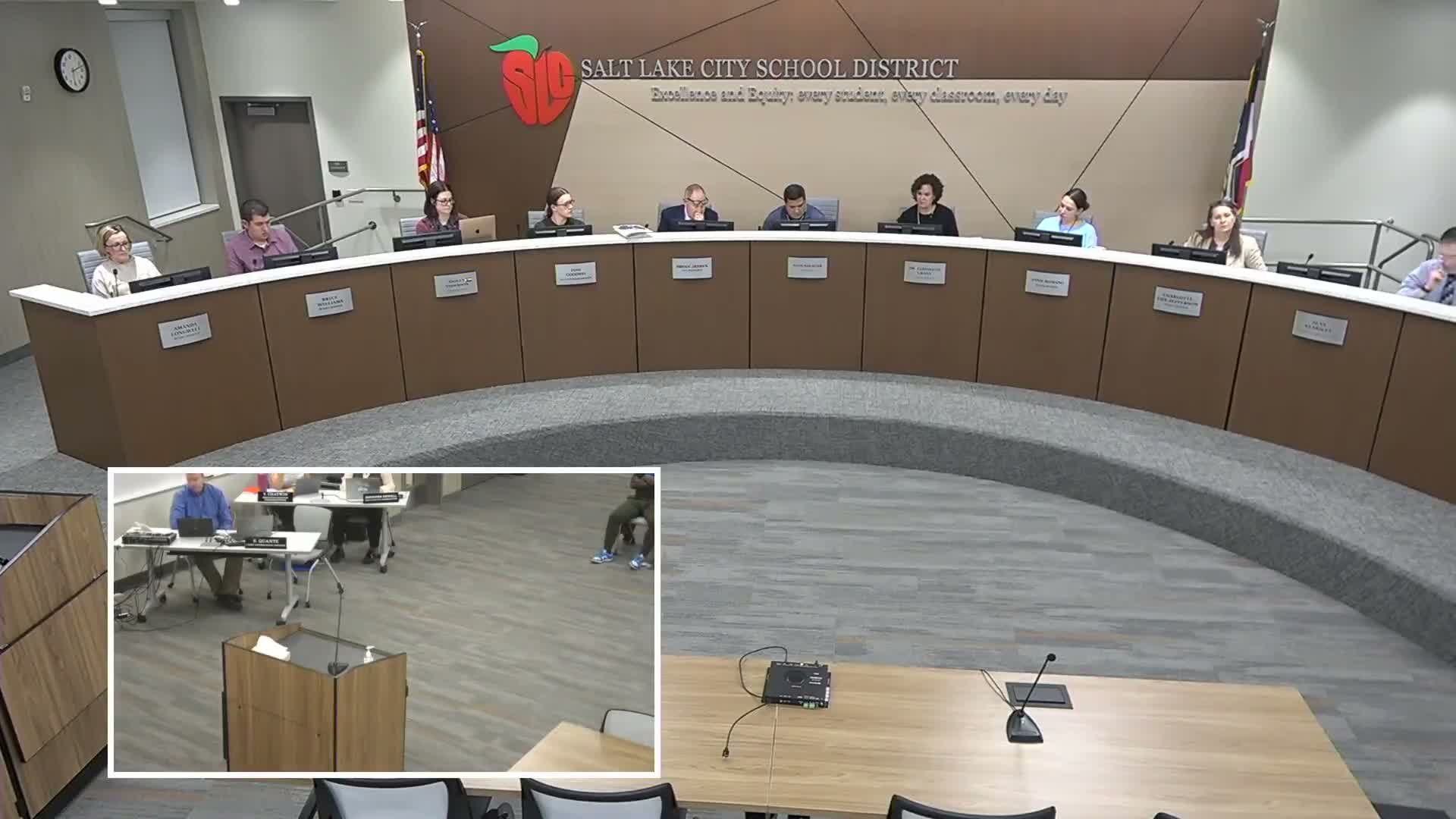
Summary
External auditors issued unmodified ("clean") opinions on the district's financial statements, federal grants and state programs, but district staff reported expenditures exceeded revenues by about $6.7 million for the year ended June 30, 2025, prompting budget-balancing work for the next cycle.
Contracted auditors told the Salt Lake City School District Board on Jan. 6 that they issued unmodified opinions on the district's financial statements, federal grant compliance and state program audits.
"We gave an unmodified opinion," the auditors said during the board meeting, a standard accounting term indicating the auditors did not identify material misstatements in those areas. The district also received a certificate of achievement for excellence in financial reporting.
Why it matters: district staff told the board that for the fiscal year ending June 30, 2025, expenditures outpaced revenues by about $6,700,000. The business administration team said the shortfall was closed using general-fund reserves but characterized that approach as "not sustainable" and said restoring balance will be a central focus of the upcoming budget cycle.
The auditors and finance staff also highlighted other factors that will influence budgeting decisions. District staff said property-tax growth is being used to cover inflationary increases in operating costs rather than discrete new programs this year, and they noted the district faces significant tax increment financing (TIF) diversions to community reinvestment agency projects (district staff cited roughly $36 million diverted last year), which complicates interpreting headline growth numbers.
Board members pressed staff for more detail about the enrollment and revenue picture. Finance staff said the district experienced an enrollment decline of roughly 530 students year-over-year and that the average WPU-equivalent revenue was about $4,494 per student, which helps translate enrollment changes into dollar impacts when projecting future budgets.
The presentation also covered technology and federal funding updates: staff said device and instructional technology costs are rising and that a previously disputed ESSER reimbursement (about $300,000) was ultimately received. The business administrator said the district will review the 1:1 device program's costs and instructional benefits and may revisit the model by the end of the school year.
What happens next: staff said they will bring more detailed budget work to the board as the district begins the next budget cycle, including potential options to close the structural gap and how any property-tax growth might be allocated once inflationary pressures ease.