Sierra Vista council accepts $311,574 DPS grant to expand license-plate readers, add a K-9 and two unmarked pickups
Get AI-powered insights, summaries, and transcripts
SubscribeSummary
The Sierra Vista City Council on Jan. 8 approved acceptance of $311,574.35 in Arizona Department of Public Safety funding to expand license-plate-reader monitoring, purchase a replacement K-9 and handler training, and buy two unmarked pickup trucks and equipment for a community response team.
Sierra Vista — The City Council voted Jan. 8 to accept $311,574.35 in grant funding from the Arizona Department of Public Safety to expand the police department’s license-plate-reader (LPR) program, add a third police canine, and buy two unmarked pickup trucks and related equipment.
Police Chief (name not provided in the transcript) told the council the DPS award is the second year of local border-support funding the city has received and gave a line-item breakdown: $107,200 for Flock LPR monitoring (covering years two and three of the service), $19,899.75 to purchase and certify a replacement canine and handler, and $184,474.60 to buy two unmarked pickups and equipment for the community response team. “I’m requesting approval of accepting a grant funding in the amount of $311,574.35,” the Chief said during the staff report.
The chief described the LPR deployment as a 16-camera system placed inside Sierra Vista’s city limits at strategic choke points to connect with adjacent agencies’ systems and to help determine the direction of travel on state highways and Buffalo Soldier Trail. He said one public-safety benefit is locating missing people — for example, runaway juveniles or persons with dementia — by quickly identifying a vehicle’s last known direction of travel. The chief also cited uses in criminal investigations where a vehicle description, combined with an LPR hit, can produce a plate for follow-up.
Council members asked about vendor choice, data control and retention. The chief said the city selected Flock in part because the vendor integrates with Axon and has been responsive on privacy and operational questions. He confirmed that third-party-held LPR data is subject to public-record requests and said retention is 30 days: “It’s 30 days,” he stated when asked about retention. He added the system is automated and accessible to officers through department desktops and some department cell phones; outside agencies must be invited and vetted on a case-by-case basis to gain access.
Council members emphasized that LPRs will not be used for routine traffic enforcement. One council member noted the community previously rejected certain camera uses and asked staff to ensure the policy and public messaging are clear.
The Chief said part of the grant funds will purchase a third canine to maintain a goal of three active dogs in the department as one is retiring, and that funding covers required handler certification. The $184,474.60 line item covers two unmarked pickups and the equipment needed for narcotics and community response detectives.
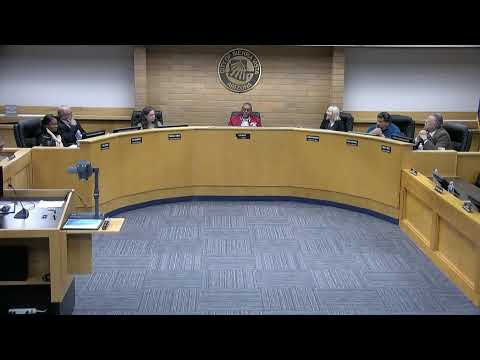
Mayor Clea McCaw called for the vote after discussion; no opposition was recorded and council approved acceptance of the DPS grant.
Next steps: Staff will proceed with the grant acceptance paperwork and procurement in accordance with contract and procurement rules; the chief said he will report regularly to council on LPR rollout, impacts and privacy safeguards.