UN economists: Venezuela oil changes unlikely to sway world markets; tariffs and AI pose mixed risks
Loading...
Summary
In a question‑and‑answer session at the WESP 2026 launch, UN economists said Venezuela’s oil output is currently a small share of international markets, U.S. tariffs and front‑loading boosted 2025 trade but may slow growth in 2026, and concentrated AI investment risks widening inequality.
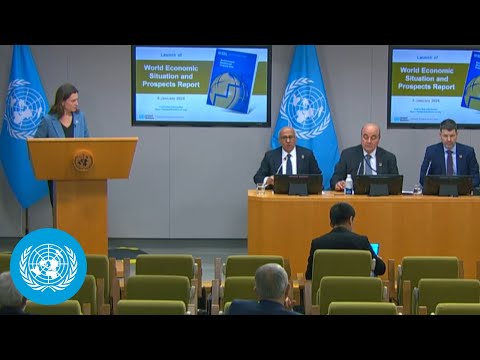
During the press briefing Q&A, correspondents pressed UN economists on specific near‑term risks to the global outlook, including Venezuela’s oil, U.S. tariffs and the distributional effects of artificial intelligence.
Asked about recent developments in Venezuela and their potential global impact, Shantanu Mukherjee said: "the proportion of oil that is traded on the world markets and originating from Venezuela is actually quite small. So on a proportional basis, we don't expect there to be much change." Ingo Pitterle added that "the reserves are very large, but the oil output is relatively small," and that market reactions so far had been muted.
On U.S. tariffs, journalists asked how much the measures affected world economic growth. The presenters said implementation details matter: front‑loading of shipments, exemptions and bilateral arrangements reduced the effective impact on trade in 2025 even as announced rates were high. Mukherjee summarized the technical point: "the effective rate ... is about 15%, not 28% as we had thought," and that some front‑loading supported stronger trade in the first half of 2025 but that trade growth is expected to moderate in 2026.
Reporters also asked about AI and inequality. Pitterle said the report highlights how AI investment, such as in data centres, is concentrated geographically and sectorally and therefore risks concentrating benefits: "this brings the risk that the benefits will also then be very much focused in specific countries and even within these countries in very specific segments." He and Mukherjee urged policies to broaden human‑capital development so more countries can share productivity gains.
Respondents raised other regional questions — on India’s growth resilience, plastic pollution's health costs and recent organizational announcements — and presenters generally noted the report's data cutoff and limitations for very recent events. The briefing closed with speakers reiterating that the full report and its data tables are available online.