
State representative previews tax, transportation and energy bills at Milwaukie work session
Get AI-powered insights, summaries, and transcripts
Sign Up Free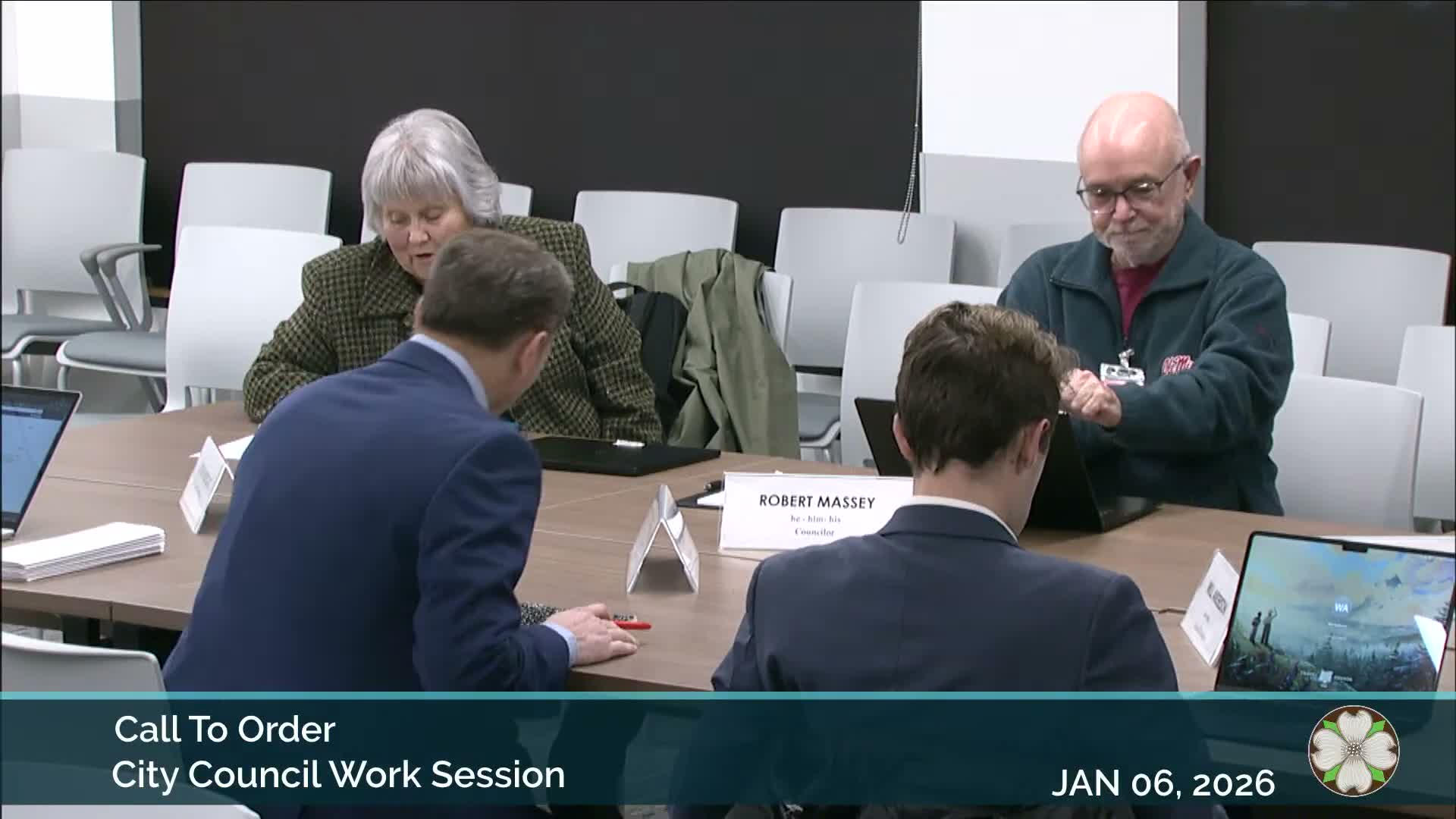
Summary
State Representative Mark Campbell told the Milwaukie council he will push bills this session to disconnect Oregon—rom federal tax code effects, create a data-driven maintenance funding model for roads, propose a vehicle sales 'privilege' tax to fund streets and seek changes to the state's "kicker" budget refund mechanism. He also previewed virtual power plant legislation to address peak electricity demand.
State Representative Mark Campbell used a Milwaukie council work session to outline several bills he plans to pursue this short legislative session, saying the proposals aim to stabilize revenue for transportation, smooth budget volatility and address near-term electricity peak risks.
Campbell told the council Oregon—urrently ties its income tax to federal rules and that a top priority is to "disconnect" the state code so federal tax cuts do not automatically alter state revenue. He said a full disconnect would be preferable but that the likely outcome is selective changes designed to limit federal pass-throughs. "If we want our system to continue to function, bridges fall into the river and things like that, we are going to have to raise revenue for our education system. Full stop," Campbell said.
Why it matters: Campbell argued the state—udget faces large swings because of the kicker refund mechanism and forecasting methods that return surpluses to taxpayers when collections exceed the state economist's estimates. He described legislation to change how the state economist reports and to reserve certain one-time surpluses (for example, to pay down debt, bond obligations or PERS mandates) instead of returning all excess funds. Campbell said those reforms would reduce the need for repetitions of emergency special sessions and unpredictable cuts to services such as housing assistance and health programs.
On transportation, Campbell previewed a two-part approach: (1) require the Oregon Department of Transportation (ODOT) to collaborate with cities and counties to build a statewide database and a paving index that defines maintenance standards, replacement schedules and per-mile costs; and (2) decouple routine maintenance funding from one-off project funding so maintenance is treated more like a utility. He said that kind of data-driven schedule would reduce repeated episodic battles over raising gas taxes and help preserve routine maintenance budgets.
Campbell also described a previously proposed vehicle sales "privilege" tax as a practical funding tool: the prior design taxed new cars at about 2% and used cars at about 1% (on values above a small threshold), which proponents estimated could raise roughly $250 million per biennium for maintenance and neighborhood-scale street projects and set aside funding for targeted programs such as Safe Routes to School.
On energy policy, Campbell said Oregon faces load growth that strains existing transmission and that virtual power plants (VPPs) ggregating smart chargers, thermostats, home batteries and distributed solar—an reduce peak demand. He said VPPs are a near-term tool to mitigate rolling blackouts while longer-term transmission and generation investments proceed. Campbell acknowledged pushback and fiscal concerns about third-party aggregators and utility roles but argued that allowing aggregators and more flexible programs has worked in other states.
Campbell encouraged the council to follow bills closely: the representative noted the compressed short-session timeline and the bill drop deadline, and he invited city support or letters backing the proposals he plans to sponsor or co-sponsor.
What happens next: Campbell said the revenue bill will go to the revenue committee and transportation proposals to the House Transportation Committee; he pledged to keep the council informed and to ask for local input as bills are refined and posted.