Get Full Government Meeting Transcripts, Videos, & Alerts Forever!
Get email alerts on the Charter Article 1 topic
No spam. Unsubscribe anytime.
CRC Group 1 begins line-by-line review of Article I; debates publication, seal, AI language and org chart
Summary
At its Jan. 7 meeting the subgroup began reviewing Article I of the charter, proposing wording changes (amendments → revisions), reconciling definitions (boards/commissions/committees), adding publication language to allow the town website subject to state law, protecting the town seal, and debating whether to add AI guardrails in the charter.
Subgroup 1 of the Charter Revision Commission started a chapter-by-chapter review of Article I on Jan. 7, raising a series of drafting and policy issues to carry forward into the CRC’s revision process. Speaker 5 proposed changing the phrase "amendments" to "revisions" in the charter preamble to reflect the commission’s work and flagged inconsistent terms (boards, commissions, committees, agencies) that should be reconciled with clear definitions.
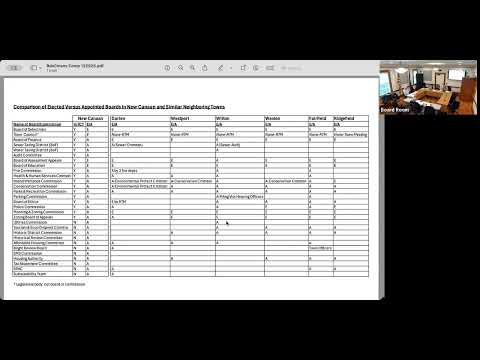
Members discussed specific provisions and possible additions: removing or reconciling the term 'agencies' where it is unused; correcting provisions that allow nonresidents on TDAC that inadvertently apply elsewhere (e.g., the audit committee); clarifying publication language so the charter names a ‘‘local publication’’ and references the town website 'subject to any state statute that may permit web posting'; and adding a dated appendix or org chart as an informational snapshot of bodies existing on the charter date.
The group considered formalizing protections for the town seal (appearance, authorized use, and the town clerk’s custodial role under state statute) and debated a proposal to add a clause limiting artificial intelligence from supplanting the decisions or authority of elected or appointed officials. The AI proposal prompted caution: several members said it may be premature to embed prescriptive AI language in the charter and suggested the council or future CRCs or ordinances could address AI governance if the issue becomes pressing.
For administrative matters, members agreed to preserve statutory references to the town’s powers for public notice, to add clarifying definitions later with staff/legal input, and to seek specific legal clarifications where necessary (for example, whether an organizational chart should live in an appendix rather than the main charter text). The subgroup tasked Jamieson and staff to prepare draft wording and to flag items that will require legal review or coordination with the CRC chair before public release.