Get Full Government Meeting Transcripts, Videos, & Alerts Forever!
Get email alerts on the Zoning Alley Definition topic
No spam. Unsubscribe anytime.
Skokie appeals board directs counsel to draft order reversing zoning administrator on gravel alley at 6900 LeClaire Ave.
Summary
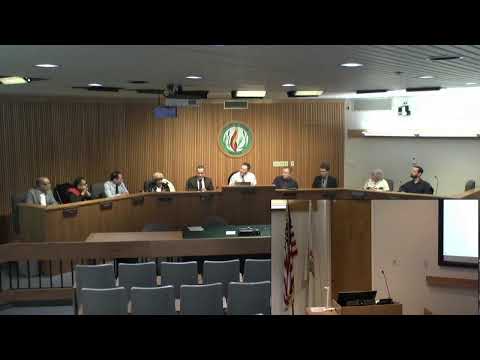
The Zoning Board of Appeals voted to direct corporation counsel to prepare an order reversing the zoning administrator’s interpretation that a gravel alley at 6900 LeClaire Avenue is an "improved alley." The draft order will return for a final board vote on Jan. 21.
The Village of Skokie Zoning Board of Appeals on Jan. 7 directed corporation counsel to prepare a draft order reversing the zoning administrator’s interpretation that the alley behind 6900 LeClaire Avenue is an "improved alley," a determination the board will vote on at its Jan. 21 meeting.
The dispute centered on how to read the zoning code’s parking/driveway provision — specifically section 118212(c)(6) of the Skokie zoning chapter — which allows off-street parking access from a public "improved alley" and prohibits curb cuts where a public improved alley exists. Appellant counsel Rolando Acosta argued that "an alley that is graveled with some vegetation in it is not improved," urging the board to adopt an ordinary-language meaning that would treat gravel alleys with vegetation as unimproved.
Corporation counsel Stu Weiss told the board members he would not ask them to take a final affirm-or-deny vote tonight but instead asked them "to come to a consensus and then take a vote not to affirm or deny, but to direct my office to prepare a formal order" setting out the board’s reasoning, which would be returned for a final vote on Jan. 21. Acosta supplied engineer opinions, photographs and a Nov. 17 email from a consulting firm; he also cited a CDOT example and a cited Evanston slip-and-fall opinion that characterized unpaved alleys as unimproved.
Village staff, including planning and public-works representatives, argued that Skokie’s practice and the intent behind the code support a broader reading of "improved." Staff members showed examples of alleys that the village maintains — including stone/gravel surfaces with an alley return, which public works regularly grades and refreshes — and said those are treated as improved because they provide vehicular access and receive maintenance.
Board members repeatedly noted the ordinance does not define the word "improved," and several said that whatever interpretation the board adopts would serve as the village’s operating precedent until the ordinance is amended. Commissioners questioned whether an alley that was once paved but later fell into disrepair would still be "improved," how common driveway relocations are, and whether the code change’s goals (stormwater control, pedestrian space) would be undermined by a narrow reading.
After a roll-call sequence, an initial motion to direct counsel to prepare an order affirming the administrator’s decision failed on a tie. A subsequent motion to reverse the administrator’s interpretation passed on roll call (ayes: Putress, Trivedi, Arden, Jacobson, Chair; nays: Worth, Kirkpatrick, Strauss). The board’s direction is not a final administrative order; Weiss will draft a written opinion with findings of fact reflecting the board’s discussion and return it for a formal vote at the Jan. 21 meeting.
The hearing record includes the appellant’s submission of engineer opinions, photographs and meeting minutes from the Aug. 17, 2023 Planning Commission hearing on the relevant ordinance language. Several commissioners and staff cautioned that the ordinance’s ambiguity could best be resolved by clarifying language from the Plan Commission or the Village Board, but the board’s near-term action is to memorialize its interpretive direction in a draft order for the next meeting.