
Aging advocates ask Vermont House Human Services Committee to add area-agency case management to proposed 2% Medicaid rate increase
Get AI-powered insights, summaries, and transcripts
Sign Up Free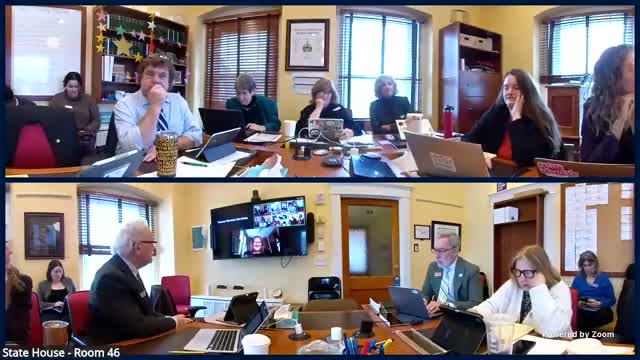
Summary
Meg Burmeister of the Northeast Kingdom Council on Aging told the House Human Services Committee that Area Agencies on Aging were excluded from a recently approved 2% Medicaid rate increase and asked lawmakers to add funding to the BAA for FY27 so AAAs can sustain case management services amid operational changes from a federal conflict-free rule.
Meg Burmeister, executive director of the Northeast Kingdom Council on Aging, told the House Human Services Committee that Vermont’s five Area Agencies on Aging (AAAs) were omitted from a legislated 2% Medicaid rate increase and asked legislators to add funding to the Budget Adjustment Act (BAA) to cover the increase for AAA case management.
"We are requesting that funding be added to the BAA to cover this 2% increase," Burmeister said, urging the committee to treat the AAAs the same as other Choices for Care providers. She told lawmakers the request reflects the legislature’s intent and is needed to preserve service quality.
Burmeister traced the omission to the committee’s enacted budget, saying "Dale had not budgeted for AAA case management," which left AAAs out of the increase. She said the omission came as AAAs were already facing heightened costs after implementing a federal conflict-free case management requirement that substantially changed operations.
"We saw almost a doubling of the clients that we were servicing and working with, which really put a great financial strain on all of the agencies," Burmeister said. For the Northeast Kingdom Council on Aging, she said, "we ended up needing to double the case management staff that we had." She added that average caseloads are "about anywhere from 50 to 60 cases."
Burmeister argued AAA case management is a cost-effective investment: by helping frail older Vermonters remain in their homes and navigate care, AAAs reduce avoidable hospital admissions and delay more costly institutional placement. She said workforce stability is crucial to sustaining that role.
Committee members sought clarifications. Burmeister confirmed the additional funding requests she listed were for fiscal year 2027. A committee member observed that, of the total fiscal impact discussed, roughly 45% would be borne by the state after federal matching funds.
In addition to the BAA request for the 2% increase, Burmeister outlined other FY27 priorities the AAAs want lawmakers to consider: $2,000,000 in base general funds for home-delivered meals (with the option to draw matching Global Commitment funds), support for ongoing HCBS reforms (including Choices for Care, case management and home health), backing a bill to appropriate $500,000 to a dementia respite grant program administered by AAAs, support for consumer privacy protections referenced as S.71, expanded SNAP outreach for older and vulnerable Vermonters, full implementation of long-term care rate studies, and support for the HomeShare network.
Burmeister also said AAAs are pursuing consistent practices statewide under the Vermont Aging Network Consortium (VANC) and are preparing for an NCQA case-management certification review scheduled for the coming February.
No formal motion or vote occurred during this testimony segment. After questioning and brief discussion the committee recessed for a 15-minute break.