
Vermont service providers ask legislature to restore flexible homelessness, recovery and legal-aid funding
Get AI-powered insights, summaries, and transcripts
Sign Up Free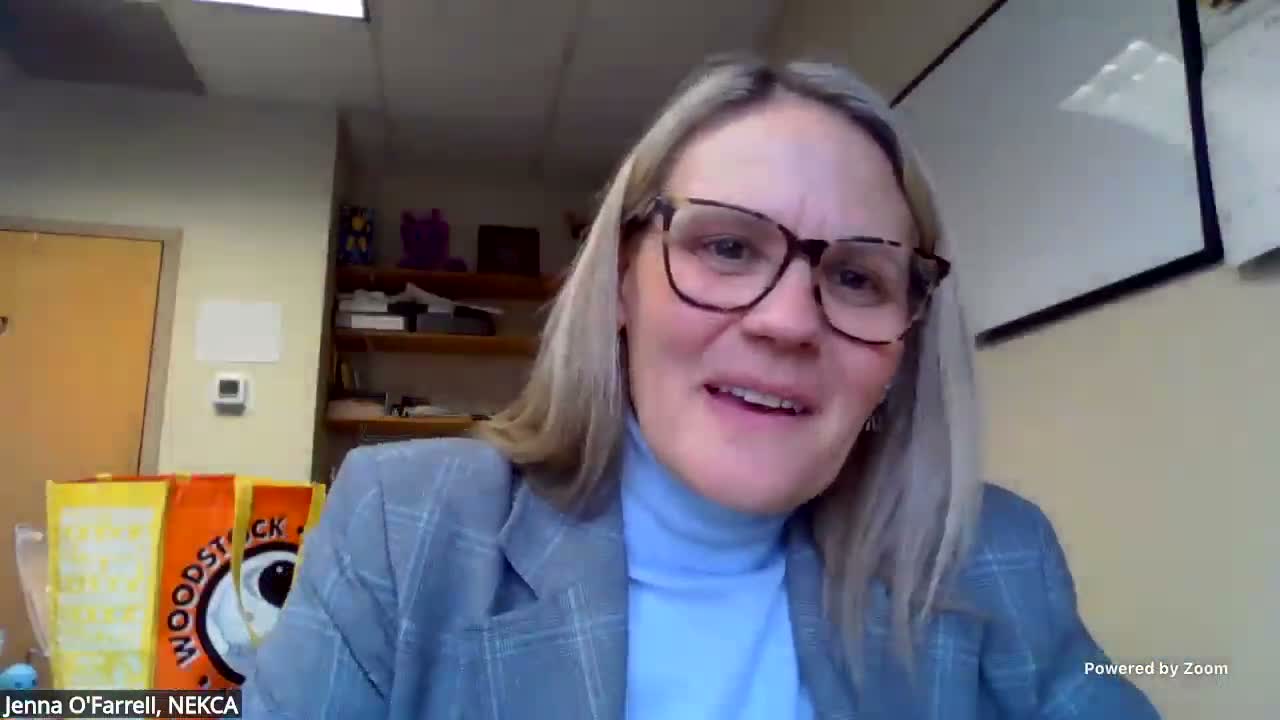
Summary
On Jan. 8 providers told the House Human Services committee that cuts to flexible homelessness prevention funds and delays in grant execution are straining shelters, recovery centers and legal aid; witnesses asked lawmakers to add roughly $2.4 million in one-time budget adjustment funds across several programs.
Jenna O'Farrell, executive director of Northeast Kingdom Community Action, told the House Human Services committee on Jan. 8 that community partners are seeking restoration of flexible Housing Opportunity Program (HOP) funds and warned of immediate consequences if the budget adjustment act does not provide $1,322,141 for short-term financial assistance.
Those flexible funds pay for short-term rental assistance, security deposits, utility deposits, transportation and other one-time costs that providers say prevent homelessness. "These funds have preserved housing, created pathways to stability, kept families together during periods of extreme stress," O'Farrell said, urging restoration to FY25 funding levels.
The committee heard similar appeals from the statewide Housing and Homelessness Alliance and individual providers. Chad Simmons, the newly appointed executive director of the Housing and Homelessness Alliance of Vermont, said HHAV supports a $1.3 million request for flexible HOP funding to fill a gap left after partial supplemental awards. Michael Redmond, senior advisor and former executive director of the Upper Valley Haven, gave examples of how relatively small flexible grants have reunited families, secured accessible units for elderly and disabled clients, and prevented evictions by paying rental arrears.
"We would sometimes combine [HOP funds] with private fundraising," Redmond said, describing cases in which first and last month's rent, security deposits or arrears of a few thousand dollars stabilized households and avoided more costly outcomes.
Brenda Siegel, executive director of End Homelessness Vermont, requested $100,000 in one-time funding for disability-focused case management, service navigation, technical assistance and "concrete supports" for medically complex clients. Siegel said those tangible items can include generators, cots or short emergency placements and are not consistently funded elsewhere. "In the last 14 months, we were able to support 80 people with complex needs to become permanently housed with only 2 returning to homelessness," she said, citing a 97.5% housing-retention rate for that caseload.
Recovery Partners of Vermont asked for $420,000 in one-time FY26 funding to shore up six recovery centers facing growing demand and delayed grant payments. Susie Walker, executive director of Recovery Partners, told the committee the six centers remain under strain from lost funding and higher client needs and that the requested funds would preserve existing services rather than expand programming.
Several recovery center leaders said demand has climbed sharply: Danielle Wallace of the Turning Point Center of Addison County reported a 20% increase in group participation and a 27% rise in 1-on-1 recovery coaching; Lila Bennett of Journey to Recovery said her center grew from one staff member in 2020 to 11 and is seeing a 50% increase among adults and a 100% increase among youth.
Witnesses raised a separate, operational concern: multiple recovery centers have not received fully executed grants tied to opioid-settlement or federal cycles, preventing centers from submitting invoices for reimbursement. Committee members pressed state witnesses to explain delays; witnesses confirmed base grants were executed late in some cases and that other federal-cycle grants remained unexecuted, creating cash-flow problems for nonprofits.
Vermont Legal Aid also sought one-time increases: interim executive director Bessie Weiss requested $535,600 to restore two poverty-law attorney positions and an additional $100,000 to shore up the statewide legal helpline, citing sustained federal funding losses that have reduced staff and capacity. Samuel Palmer of Legal Services Vermont said clinic data show legal assistance increases housing-retention rates and reduces default judgments in eviction cases.
Committee members asked for more detail on FY25-to-FY26 funding changes and on how HOP increases could coincide with reduced flexible assistance for providers. Staff and witnesses described the $1.3 million figure as the remaining gap after some supplemental awards, and attendees were asked to provide updated expenditure and award details to the committee ahead of Appropriations work.
The committee plans to wrap recommendations to House Appropriations by Friday and noted that the Appropriations Committee will hold a public hearing on the budget adjustment act; witnesses were encouraged to testify there as well.
What happens next: lawmakers on the Appropriations Committee will receive the requests and hold a public hearing as part of the budget adjustment process. Providers asked for the one-time funds to be approved to restore critical flexibility and prevent near-term increases in homelessness, disruptions to recovery services, and further reductions in legal-aid capacity.