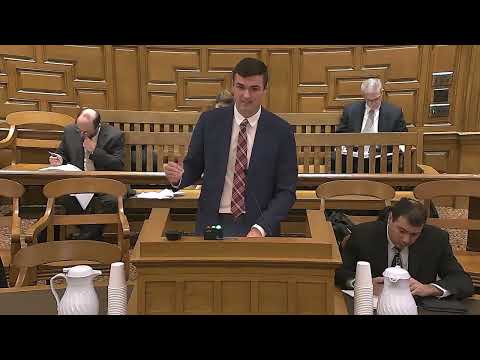
Appeals court reviews excluded texts and alleged First Amendment claim in Tucker medical‑malpractice appeal
Loading...
Summary
In a wrongful‑death malpractice appeal, the plaintiff criticized the trial judge’s exclusion of clinicians’ text messages and argued limiting orders and exclusions of ‘safety rules’ evidence inhibited presentation of foreseeability and consciousness‑of‑liability evidence; defense counsel countered that texts risked hearsay and prejudice and that the jury found no negligence.
The panel heard argument in Tucker v. Harris, a medical‑malpractice appeal stemming from the death of a young patient. Appellant counsel asked the court to find trial error in the exclusion of electronic communications — text messages and emails — that she said would have shown warnings from a supervising physician (Dr. Haines) to defendant Dr. McNeil and evidence of heightened mortality risk and clinician concern.
Counsel identified specific withheld messages and argued they were not offered for the literal truth that the patient’s mortality was ‘super high’ but rather to show Dr. Haines conveyed warnings to Dr. McNeil and to support expert testimony that the sequence of events was rare and concerning. She also argued that a pretrial restriction on using the phrase ‘safety rules’ and other limitations amounted to an improper prior restraint on advocacy at trial.
Defense counsel responded that the messages risked unfair prejudice or jury confusion because they could be read as hearsay about medical condition or as commentary about policy rather than the applicable legal standard of care; they also emphasized foundation problems (Dr. Haines was not disclosed as an expert and it was unclear he supervised the treating clinician). Counsel noted the jury returned a verdict finding no negligence across defendants, and said causation and stigma evidence had been properly limited or excluded for lack of foundation.
The court questioned how the texts would be offered (for notice/state of mind or for their truth), whether prior restraint doctrine applied to routine evidentiary rulings, and whether excluding the messages materially affected the jury’s ability to find negligence. The panel took the matter under advisement.